- Blogs are found through search; podcasts mostly through podcast apps.
- A podcast needs a microphone, editing and hosting; free hosting plans exist.
- Blogs are easy to update; episodes are hard to change once published.
- Give each episode a web page with notes or a transcript.
- Start one format, then add the other once it runs smoothly.
Blog vs podcast comes down to how your audience prefers to learn and how you like to create. A blog suits people searching for answers, steps and comparisons, is cheap to start and can earn from search for years. A podcast suits listeners who want a regular companion during commutes and chores, builds a closer relationship through your voice, but is found mainly through podcast apps rather than search. Many creators start with one and add the other. This guide compares the two on cost, effort, discovery, earning and skills, with prices from the hosts’ own pages, checked on 12 October 2026.
Already decided on a podcast with a WordPress site? See our comparison of WordPress podcast plugins. Leaning towards a blog? Start with how to start a blog.

Blog vs podcast at a glance
| Blog | Podcast | |
|---|---|---|
| Best for audiences who | search for answers and steps | listen on the go, regularly |
| Main way people find you | search engines and links | podcast apps, recommendations |
| Cost to start | a domain and hosting | a microphone and podcast hosting (free plans exist) |
| Time per piece | writing and editing | planning, recording, editing, publishing |
| Relationship with audience | trusted reference | personal, voice-led |
| Easy to update later | yes, edit the post | harder; record a new episode |
Discovery: how people find each one
A blog post can be found by anyone who searches for its question. Google describes crawling and indexing pages to show them for relevant searches; an article that answers a common question well can keep bringing readers for years. Our SEO basics guide explains how that works.
A podcast is mostly found inside podcast apps, through their charts, recommendations and search, and through word of mouth and guest appearances. Apple’s requirements show how distribution works: your show comes from an RSS feed, usually issued by a podcast hosting provider, which must meet Apple’s technical requirements, such as a unique enclosure for each episode and a globally unique identifier that never changes. A podcast’s website and episode pages, with show notes or transcripts, are what search engines can read.
Cost and effort
Starting a blog
You need a domain, hosting and WordPress (which is free software), plus your time to write. Our guide to cheap WordPress hosting compares entry prices. Each post is writing and editing, plus images or screenshots.
Starting a podcast
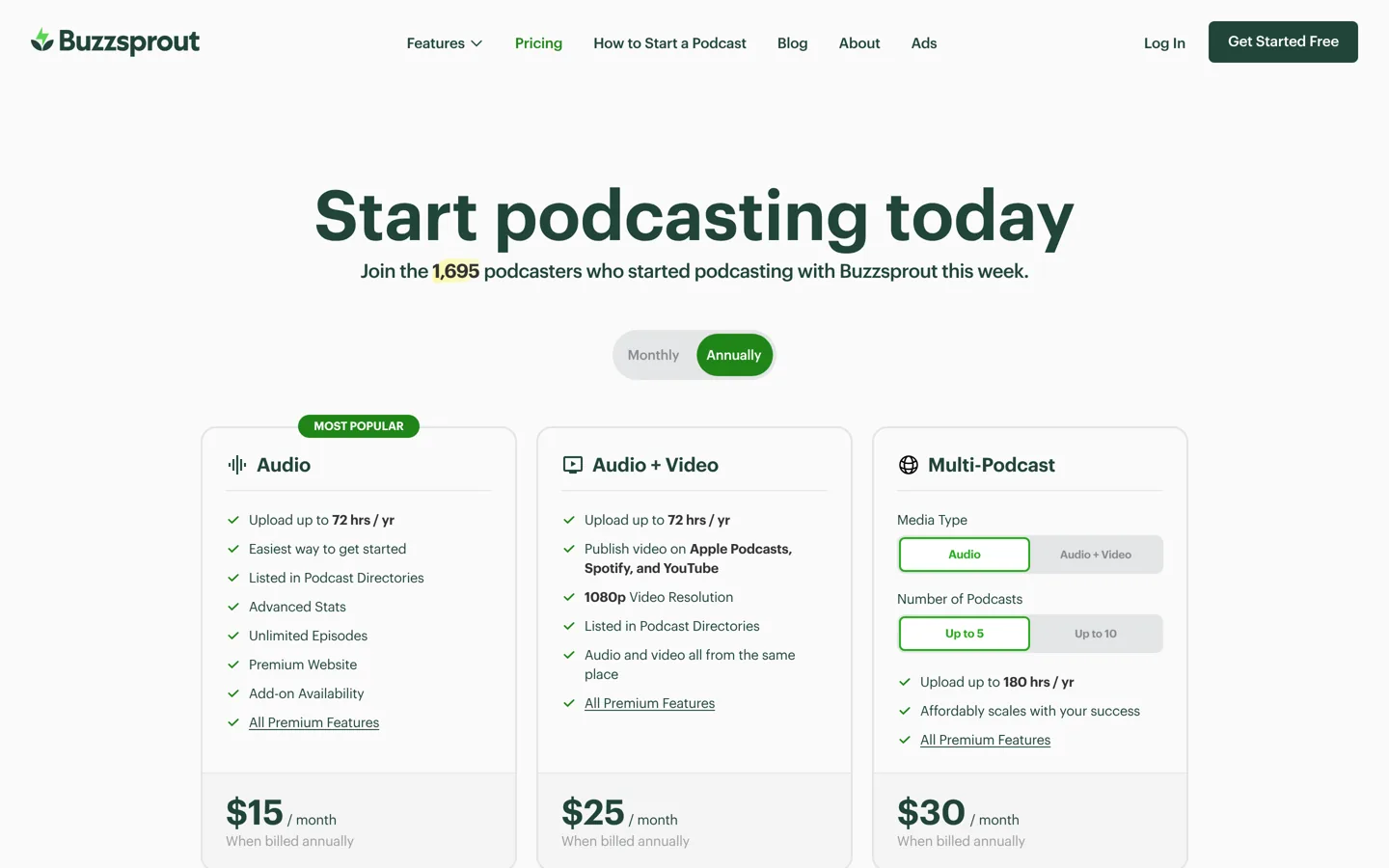
You need a decent microphone, a quiet room, editing software and podcast hosting. Hosting has free and paid options: Buzzsprout‘s pricing page lists a free plan with 2 hours of uploads a month, with episodes hosted for 90 days, and paid audio hosting from $15 a month billed annually. Each episode takes planning, recording, editing, show notes and publishing, and interview shows add scheduling guests.
Earning from each
- Blogs earn from display ads, affiliate links in reviews and comparisons, sponsored posts, digital products and services. Search traffic makes affiliate income especially strong, because readers arrive while deciding what to buy. See our overview of ways to earn money from a blog.
- Podcasts earn mainly from sponsorships read by the host, listener support, premium episodes and products. The close relationship makes host-read recommendations persuasive, but audiences usually need to be large or highly specific before sponsors pay well.
Skills: what each asks of you
- A blog rewards clear writing, research, structure and basic SEO. You can edit a sentence until it’s right.
- A podcast rewards speaking naturally, interviewing, audio editing and consistency. Your personality carries the show.
Choose the one you’ll enjoy doing every week for a year. The format you can sustain will beat the one that looks better on paper.
Find out how your audience prefers to learn
Before choosing, look at where your future audience already goes. Search your topic on Google: if the results are full of guides, lists and comparison articles, people want to read. Search the same topic in a podcast app: if there are active shows with recent episodes and reviews, people want to listen. Then ask a few people in your audience directly, in a group or by email, whether they’d rather read a guide or listen to a conversation on the subject. Their answer matters more than any general trend.
What a typical week looks like
- Blogging: research one topic, write a draft, add screenshots or images, edit, publish, then share it on social media and in your newsletter. Older posts need occasional updates.
- Podcasting: plan the episode, book and brief a guest if it’s an interview, record, edit the audio, write show notes and a title, publish through your host, then share clips and the episode page.
Both take several hours per piece when done well. The difference is the kind of work: quiet research and writing, or preparation, conversation and audio editing.
What you need to start a podcast
- A microphone placed close to you: a simple USB microphone is a big step up from a laptop’s built-in one.
- Headphones, so you hear problems while recording and avoid echo on calls.
- A quiet room with soft furnishings, which absorb echo.
- Recording and editing software, many of which are free.
- Podcast hosting, which creates the RSS feed that apps read.
Start with what you have and upgrade only once you know you’ll keep going.
Which should you choose?

- Choose a blog if your audience searches for how-tos, reviews and comparisons, you want income from affiliate links and search, or you prefer writing.
- Choose a podcast if your topic suits conversation and stories, your audience listens while doing other things, you enjoy talking and interviewing, and you can publish on a regular schedule.
- Do both, in order: start with the one that fits best, then add the other once the first runs smoothly.
How to combine a blog and a podcast
- Give each episode a page on your site with show notes, links and, ideally, a transcript, so search engines can find the content. PowerPress, for example, supports Podcasting 2.0 features such as transcripts and chapters, according to its WordPress.org listing.
- Turn your best episodes into articles that answer one question each, rather than pasting the whole transcript.
- Mention articles in episodes, and embed episodes in related articles.
- Use one email list for both, so readers and listeners all hear about new work.
Examples: which format fits which topic
- Software tutorials and reviews: a blog first. Readers need steps, screenshots and comparison tables they can come back to.
- Interviews with people in your industry: a podcast first. Conversation is the content, and a written summary can follow.
- Personal finance, health habits or parenting: either. Many readers search for specific answers, while listeners enjoy a regular, encouraging voice.
- News and commentary in a niche: a podcast or a newsletter often fits, because the value is in your regular take, not in a page that ranks for years.
These are starting points, not rules. Your audience’s habits, from the research above, decide.
What about video?
Many podcasts are also published as video, and YouTube can be a third option alongside a blog or a podcast. It brings its own search and recommendations, but adds filming and thumbnails to your workload. If you’re curious, our guide on how to make YouTube videos covers the basics. As with the other two, choose it only if you’ll enjoy making it regularly.
How to measure each one
A blog’s numbers come from Google Search Console (the searches that show your pages, and clicks) and your analytics (visits and what readers do next). A podcast’s numbers come mainly from your hosting provider’s statistics, such as downloads per episode, and from podcast apps’ own dashboards. Watch trends over months, not single episodes or posts, and look for the topics that keep bringing people back. Whichever you choose, track email sign-ups too: they’re the audience you own, whatever happens to search rankings or app charts.
A simple way to decide
- Write down five questions your audience asks. If they’re mostly “how do I…” or “which is best…”, a blog fits.
- Write down five conversations you’d love to have on your topic. If the list comes easily, a podcast may fit.
- Make one of each: one article and one 15-minute episode. Notice which you enjoyed and which you’d happily repeat weekly.
- Commit to that format for three months before adding the other.
Switching later
Your first choice isn’t permanent. A blog can add a podcast once you have readers who’d like to hear you, and a podcast can add a blog by turning episode notes into full articles. The work you’ve done carries over: your topic knowledge, your audience and your email list. What matters most in the first year is publishing consistently in one format, so you learn what your audience wants before spreading your time across two.
Common mistakes
- Starting both at once and burning out within a few months.
- A podcast with no website, so search engines can’t find anything.
- A blog with no clear topic or reader.
- Buying expensive gear before you know you’ll keep going with the show.
- Irregular publishing, which matters especially for podcasts, where listeners subscribe to a schedule.
Questions people ask
Should I start a blog or a podcast?
Start a blog if your audience searches for answers and comparisons and you prefer writing; start a podcast if your topic suits conversation, you enjoy talking and can publish regularly.
Which is cheaper, a blog or a podcast?
Both can start cheaply. A blog needs a domain and hosting; a podcast needs a microphone and podcast hosting, where Buzzsprout, for example, lists a free plan with 2 hours of uploads a month.
Can a podcast help SEO?
Search engines read web pages, so give each episode a page with show notes or a transcript, and turn the best episodes into articles.
Which makes more money?
It depends on the audience. Blogs are strong for affiliate income from search; podcasts earn mainly from host-read sponsorships and listener support once the audience is large or specific.
How do podcasts get onto Apple Podcasts?
Through an RSS feed, usually from a podcast host, that meets Apple's technical requirements, submitted via an Apple Podcasts Connect account.
Can I do both?
Yes. Start with one, then add the other, linking episodes and articles and using one email list for both.
Sources
- Podcast requirements (Apple Podcasts for Creators) podcasters.apple.com · checked October 12, 2026
- Buzzsprout pricing www.buzzsprout.com · checked October 12, 2026
- PowerPress on WordPress.org wordpress.org · checked October 12, 2026
- In-depth guide to how Google Search works developers.google.com · checked October 12, 2026

Building websites since 2006: 500+ web projects of every size and $300K+ in website deals sold or brokered. Founder of A Digital Motive and DigiFlippers. I share the whole process here, plainly.
Founder of A Digital Motive and DigiFlippers