- Google lists excessive "link to me and I'll link to you" exchanges as link spam.
- Since December 2022, SpamBrain neutralises unnatural links and their credit is lost.
- Unnatural links can lead to a manual action shown in Search Console.
- Paid links are fine when marked rel="sponsored" (or nofollow).
- Most sites never need the disavow tool; Google warns it can harm if misused.
A backlink exchange is an arrangement where sites agree to link to each other to boost their search rankings, often through a “program” or network that matches members. Google’s spam policies name “excessive link exchanges (‘Link to me and I’ll link to you’)” and partner pages made only for cross-linking as link spam, so these schemes can get your links ignored or, in serious cases, your pages demoted. This guide explains where Google draws the line, what can happen, what to do if you’ve already joined one, and better ways to earn links, using Google’s own documentation, checked on 12 October 2026.
Want to see who links to you? Our guides to free backlink checkers and the best backlink checker tools show how. This page is about one specific risk.

What Google says about backlink exchange schemes
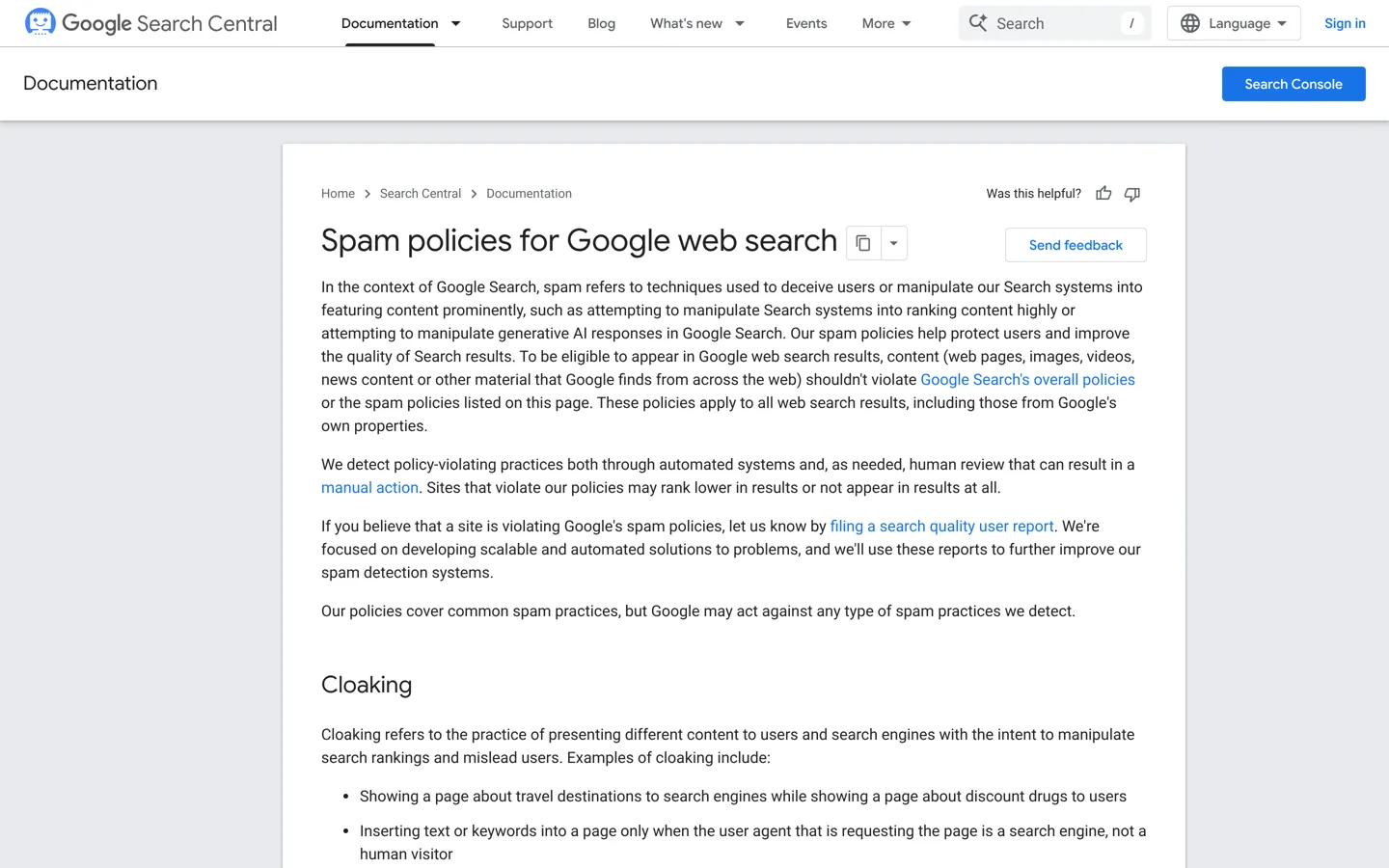
Google’s spam policies define link spam as creating links to or from a site primarily to manipulate search rankings. Its list of examples includes:
- buying or selling links for ranking purposes, including exchanging goods or services for links;
- excessive link exchanges (“Link to me and I’ll link to you”) or partner pages exclusively for the sake of cross-linking;
- using automated programs or services to create links to your site;
- low-quality directory or bookmark site links;
- links widely distributed in the footers or templates of various sites;
- creating low-value content primarily to manipulate linking and ranking signals.
Most backlink exchange programs tick several boxes at once: they exist to swap links for rankings, they often use automated matching, and they produce pages or posts whose main purpose is to hold links.
Not every link between two sites is a problem
Notice the word “excessive”. Two related sites linking to each other because the content genuinely helps their readers is normal on the web. A food blogger linking to a friend’s recipe they cooked, who later links back, isn’t link spam. The problem is a deliberate pattern of swapping links for rankings, especially at scale or through a network.
Why link exchanges harm your website

1. The links stop counting
In December 2022, Google announced it was using SpamBrain, its AI-based spam-prevention system, to neutralise the impact of unnatural links, saying SpamBrain can detect both sites buying links and sites used to pass outgoing links. Google said rankings may change as spammy links are neutralised and any credit they passed is lost. In other words, the time you spent swapping links can simply evaporate.
2. A manual action
Google issues a manual action when a human reviewer finds pages that don’t comply with its spam policies, and affected pages can be ranked lower or left out of results. Unnatural links to your site are one of the reasons Google lists, and the notice appears in the Manual actions report in Search Console.
3. Bad company
Link exchange networks attract low-quality sites. Your outgoing links point readers to pages you’d never recommend, and your site appears alongside spam in the network’s link pages. That hurts trust with readers as well as search engines.
4. Wasted time
Every hour spent arranging swaps is an hour not spent on content that earns links naturally and keeps earning them.
Signs a “backlink exchange program” is risky
- It promises a number of backlinks or a ranking increase in a set time.
- It requires you to link to other members, often from your sidebar, footer or a “partners” page.
- Member sites cover unrelated topics, or are full of thin articles with several outbound links each.
- Links must be “dofollow” and you’re asked not to add
rel="sponsored"orrel="nofollow". - It uses three-way or “ABC” swaps to make the pattern harder to spot. The intent is the same.
How to label links correctly
Google says buying and selling links is a normal part of the web for advertising and sponsorship, and isn’t a policy violation as long as those links are qualified. Its guidance on link attributes explains:
rel="sponsored"for advertisements or paid placements. Google notes nofollow is still acceptable for these, but sponsored is preferred.rel="ugc"for user-generated content such as comments and forum posts.rel="nofollow"when the other values don’t apply and you’d rather Google not associate your site with the linked page.
You can combine values, such as rel="ugc nofollow". Affiliate links should also be marked as sponsored, which most affiliate link plugins can do for you.
If you’ve already joined a link exchange

- Stop. Leave the program and don’t add new swaps.
- Check Search Console’s Manual actions report. If there’s no manual action, you may only need to clean up.
- Remove or qualify the links you placed for the exchange, adding
rel="sponsored"orrel="nofollow"where removing isn’t practical. Ask other sites to remove links they placed for you. - Use the disavow tool only if needed. Google’s disavow guide says most sites won’t need it: disavow only if you have a considerable number of spammy, artificial or low-quality links and they have caused, or likely will cause, a manual action. Google warns it’s an advanced feature that can harm your site’s performance if used incorrectly.
- If you have a manual action, fix the issues and submit a reconsideration request through the Manual actions report.
How to audit your own outgoing links
Link exchanges leave traces on your own site, which are the easiest part to fix:
- Look at sitewide areas first: the sidebar, footer and any “partners”, “friends” or “resources” page. Links placed there for a swap appear on every page.
- Crawl your site with a site audit tool, or check your backlink tool’s outgoing-links report, and export every external link.
- Ask of each link: would I link to this if no one asked? Would a reader find it useful here? If not, remove it.
- Qualify links you keep for business reasons (sponsors, paid placements, affiliates) with
rel="sponsored". - Record what you changed and when, in case you need to explain it in a reconsideration request.
What a typical exchange offer looks like
Offers usually arrive by email or through a site’s contact form. A typical one (an illustration, not a real message) reads: “We love your blog! We’d like to add a link to your site from our high-authority article if you link back to our client from one of your posts. We can also offer a three-way exchange so it looks natural.” Every part of that is a warning: the link is offered only in return for a link, the “authority” is a sales claim, and “so it looks natural” admits the goal is to hide the pattern. A polite “no thanks”, or no reply at all, is the right answer.
How to judge a link opportunity
- Relevance: is the other site about the same topic, with readers who’d care about your page?
- Quality: does it publish useful, original content, or thin posts stuffed with outgoing links?
- Reason: would the link exist if no one were swapping anything?
- Labelling: if money, products or services change hands, the link should be marked sponsored.
If a link passes all four, it’s the kind Google is happy to count. If it fails any of them, it’s either worthless or a risk.
Better ways to earn backlinks
- Publish something worth citing: original data, a clear guide, a useful free tool or a comparison other writers will link to.
- Help journalists and bloggers with expert answers on topics you know well.
- Guest posts written for readers, on relevant sites, with links qualified as the host site prefers; Google’s examples of link spam include optimized anchor-text links in guest posts.
- Fix broken links: find sites linking to dead pages on your topic and offer your page as a replacement.
- Build relationships in your niche; natural links follow genuine mentions and collaboration.
For the whole picture of on-page work that makes a page worth linking to, see our on-page SEO checklist. To research what to write about, start with keyword research.
How long recovery takes
If your rankings relied on swapped links, expect a dip while Google stops counting them; there’s no shortcut back. Google’s announcement of its link spam update said ranking may change as spammy links are neutralised and the credit they passed is lost. Recovery comes from replacing that lost credit with links you’ve genuinely earned and content that deserves to rank. If you had a manual action, Google reviews your reconsideration request once you’ve cleaned up; until then, the affected pages can stay lower. Plan for months, not days, and keep publishing while you wait.
Common questions people ask before joining
- “Everyone in my niche does it.” Common doesn’t mean safe: Google built SpamBrain specifically to detect sites used to pass links and neutralise them, and you can’t see what it has already discounted on other sites.
- “The links are on real sites.” What matters is why the link exists. A link placed only because of a swap is still a swap.
- “I’ll only do a few.” A handful of genuinely relevant links is normal; a program that requires them is not.
Questions people ask
Is a backlink exchange bad for SEO?
Excessive link exchanges are link spam under Google's spam policies. The links are likely to be neutralised, and serious cases can lead to a manual action.
Are reciprocal links always bad?
No. Related sites sometimes link to each other naturally because it helps readers. The problem is deliberate, excessive swapping for rankings.
What happens if Google finds link spam on my site?
Most often the links simply stop passing credit. In serious cases a human reviewer issues a manual action, and pages can be ranked lower or left out of results.
Can I buy links if I mark them?
Google says paid links for advertising are fine when qualified with rel="sponsored" or rel="nofollow"; they just don't pass ranking credit.
Should I disavow links from a link exchange?
Only if you have many spammy links and they've caused, or likely will cause, a manual action. Otherwise remove or qualify them; Google can usually assess links on its own.
What's a safer way to get backlinks?
Publish content worth citing, such as original data or clear guides, help journalists, write genuine guest posts and fix broken links in your niche.
Sources
- Spam policies for Google web search developers.google.com · checked October 12, 2026
- Qualify your outbound links to Google developers.google.com · checked October 12, 2026
- December 2022 link spam update (Google Search Central Blog) developers.google.com · checked October 12, 2026
- Disavow links to your site (Search Console Help) support.google.com · checked October 12, 2026
- Manual actions report (Search Console Help) support.google.com · checked October 12, 2026

Building websites since 2006: 500+ web projects of every size and $300K+ in website deals sold or brokered. Founder of A Digital Motive and DigiFlippers. I share the whole process here, plainly.
Founder of A Digital Motive and DigiFlippers