
Some links on this page are affiliate links. If you buy through them I may earn a commission, at no extra cost to you. It never changes a rating. Read the disclosure
- Measure your own blog with Search Console and Google Analytics; both are free.
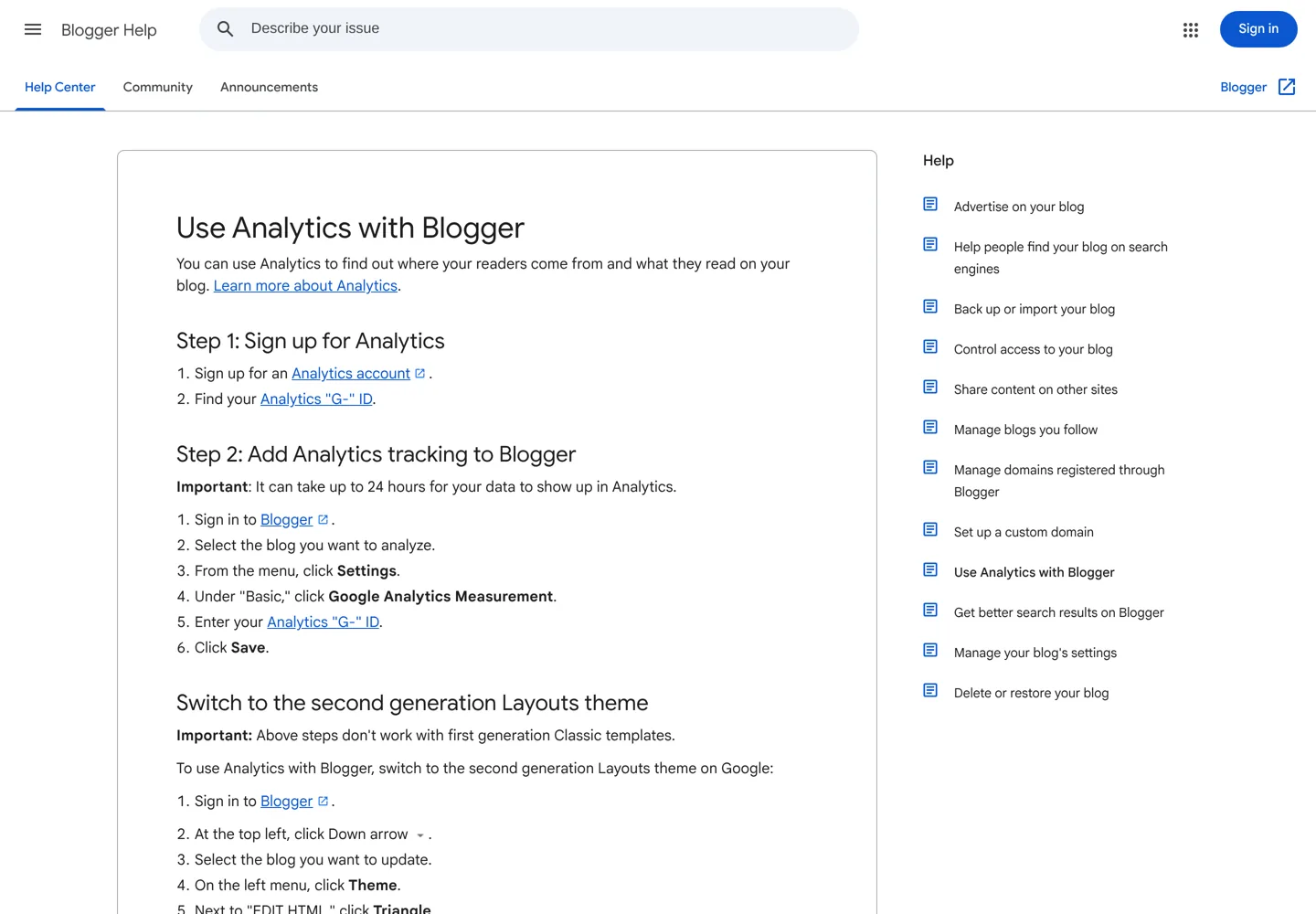
- On Blogger, add your "G-" ID under Settings → Google Analytics Measurement ID.
- Jetpack Stats is free for any WordPress site; a paid plan adds device, UTM and city stats.
- Semrush, Ahrefs and Similarweb only estimate other blogs' traffic.
- Tools count different things, so compare trends within one tool.
A blog traffic checker answers one of two questions: how much traffic does my blog get, or how much does someone else’s blog get? The tools are different. For your own blog, free tools such as Google Search Console, Google Analytics, Blogger’s built-in Stats and Jetpack Stats measure your real visitors. For any other blog, tools like Semrush, Ahrefs and Similarweb can only estimate, so their numbers are a guide, not a count.
This guide shows the best free way to check each, step by step for Blogger (Blogspot) and WordPress, and explains why the numbers never quite match between tools. Every feature and limit comes from the tools’ own help pages, checked on the date at the end.
The best blog traffic checker for each job
| Tool | Checks | Shows | Cost |
|---|---|---|---|
| Google Search Console | Your blog | Clicks and searches from Google | Free |
| Google Analytics | Your blog | All visitors, sources, real-time | Free |
| Blogger Stats | Your Blogger blog | Views, top posts, sources | Free, built in |
| Jetpack Stats | Your WordPress blog | Visitors, views, real-time | Free; paid adds more |
| Semrush | Any blog | Estimated visits, sources, keywords | Free checker; paid for more |
| Ahrefs | Any blog | Estimated search traffic | Free version |
| Similarweb | Any blog | Estimated visits and ranking | Free checker; paid for more |

Check your own blog’s traffic
For your own blog, always use a tool that measures your site directly. Estimates are useful for comparing with others, never for your own numbers.
If you only set up one tool, make it Search Console: it’s free, takes a few minutes and shows the searches that bring readers to you, which is what most blog growth depends on. Add Google Analytics next, when you want to see visitors from social media, email and other sites as well.
1. Google Search Console
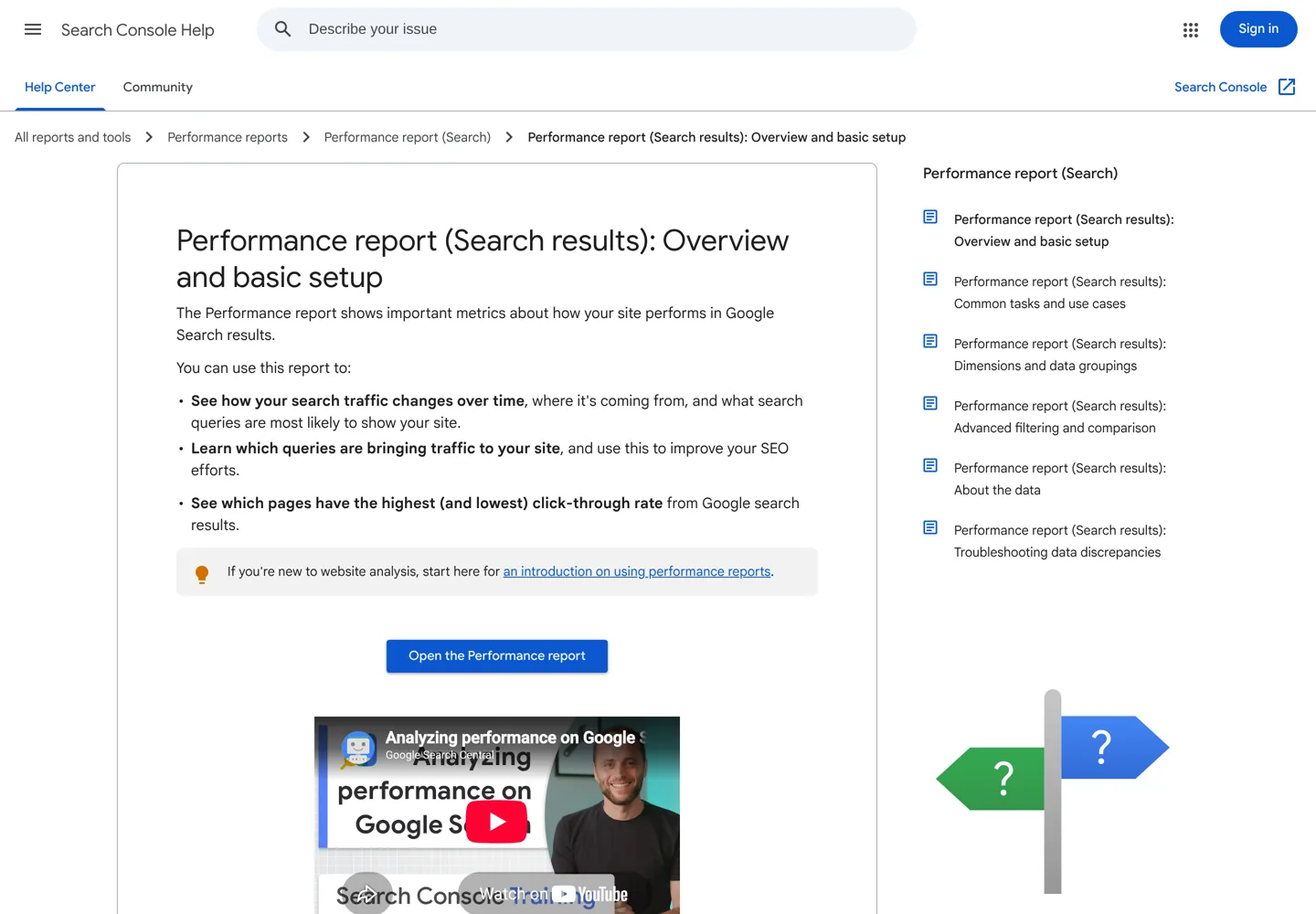
Google Search Console shows how people find your blog in Google Search. Its Performance report gives four numbers for any period: clicks (visits from Google Search), impressions (how often your pages appeared in results), CTR (clicks divided by impressions) and average position. It also lists the exact searches and pages behind them, which makes it the best tool for deciding what to write and improve next.
It works with Blogger and WordPress alike. The report opens on the last three months, and you can change the date range. Its limit: it counts only Google Search, not visitors from social media, email or other search engines.
2. Google Analytics
Google Analytics counts every visitor, wherever they came from, and shows which posts they read and how they found you. Its Realtime report shows active users in the last 30 minutes, handy right after you publish or share a post.
On Blogger: create a Google Analytics account and copy your measurement ID (it starts with “G-“). In Blogger, open Settings, find Google Analytics Measurement ID under “Basic”, paste the ID and save. Google says data can take up to 24 hours to appear, and that this doesn’t work with first-generation Classic templates.
On WordPress: add the same “G-” tag with a plugin (many SEO and analytics plugins include a field for it) or through your theme’s header settings.
3. Blogger’s built-in Stats
If your blog runs on Blogger, open Stats in your blog’s left-hand menu. It shows views over time, your most-read posts and where visitors came from, with no setup. It’s the quickest blogger traffic checker, but it’s simpler than Google Analytics, and the two count visits differently, so don’t expect them to match.

4. Jetpack Stats (WordPress)
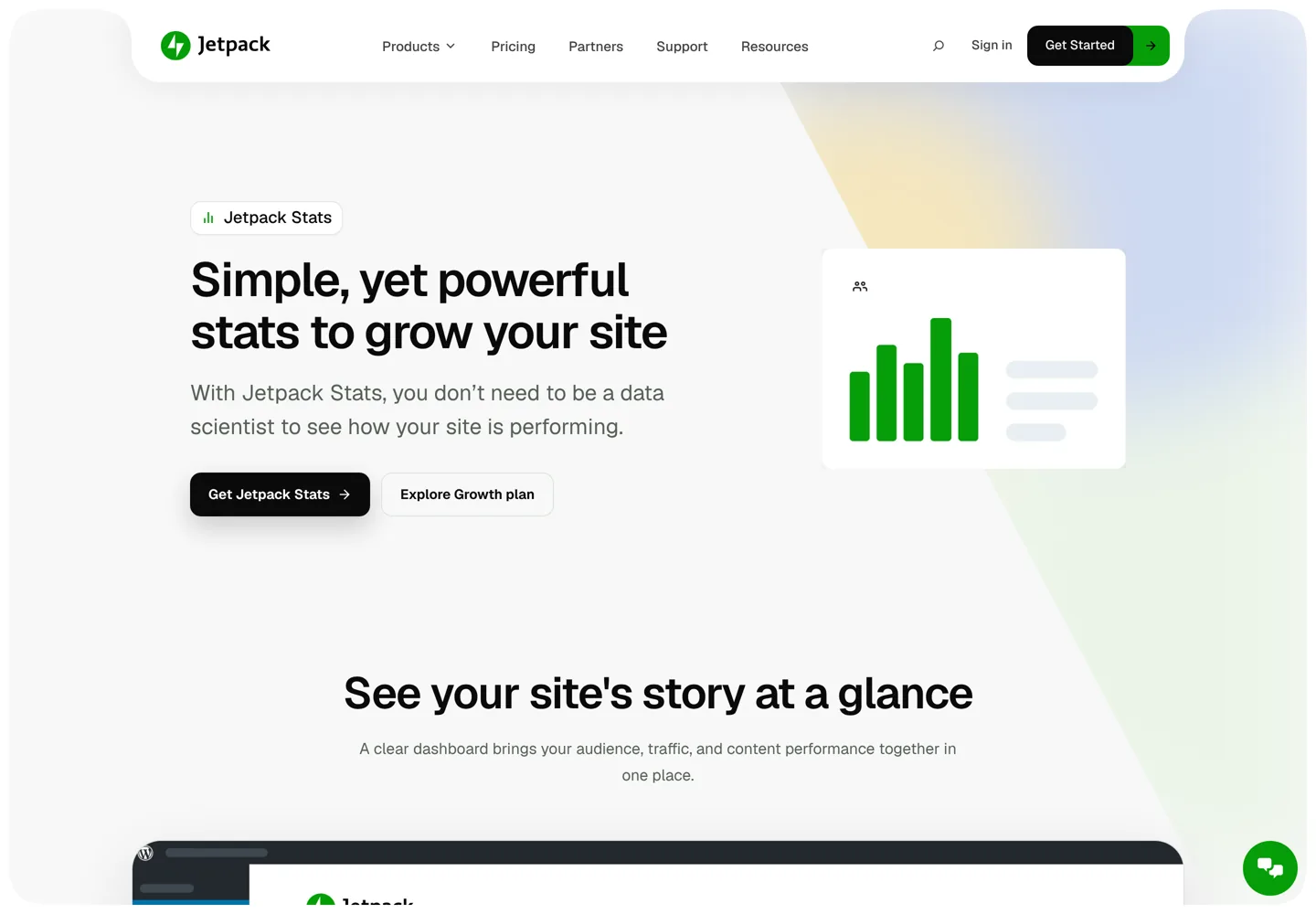
On a self-hosted WordPress blog, Jetpack Stats adds visitor statistics to your dashboard, including real-time data on visitors, likes and comments. Jetpack says Stats is available for free for any type of site and any amount of traffic, and that a paid plan adds UTM stats, device stats, and region and city locations. It’s a good choice if you’d rather not set up Google Analytics.
Check any blog’s traffic
To see roughly how much traffic a competitor or a blog you might buy gets, you need an estimate tool. These don’t see the other site’s analytics; they model traffic from other data, so treat the numbers as rough and compare sites within the same tool.
5. Semrush
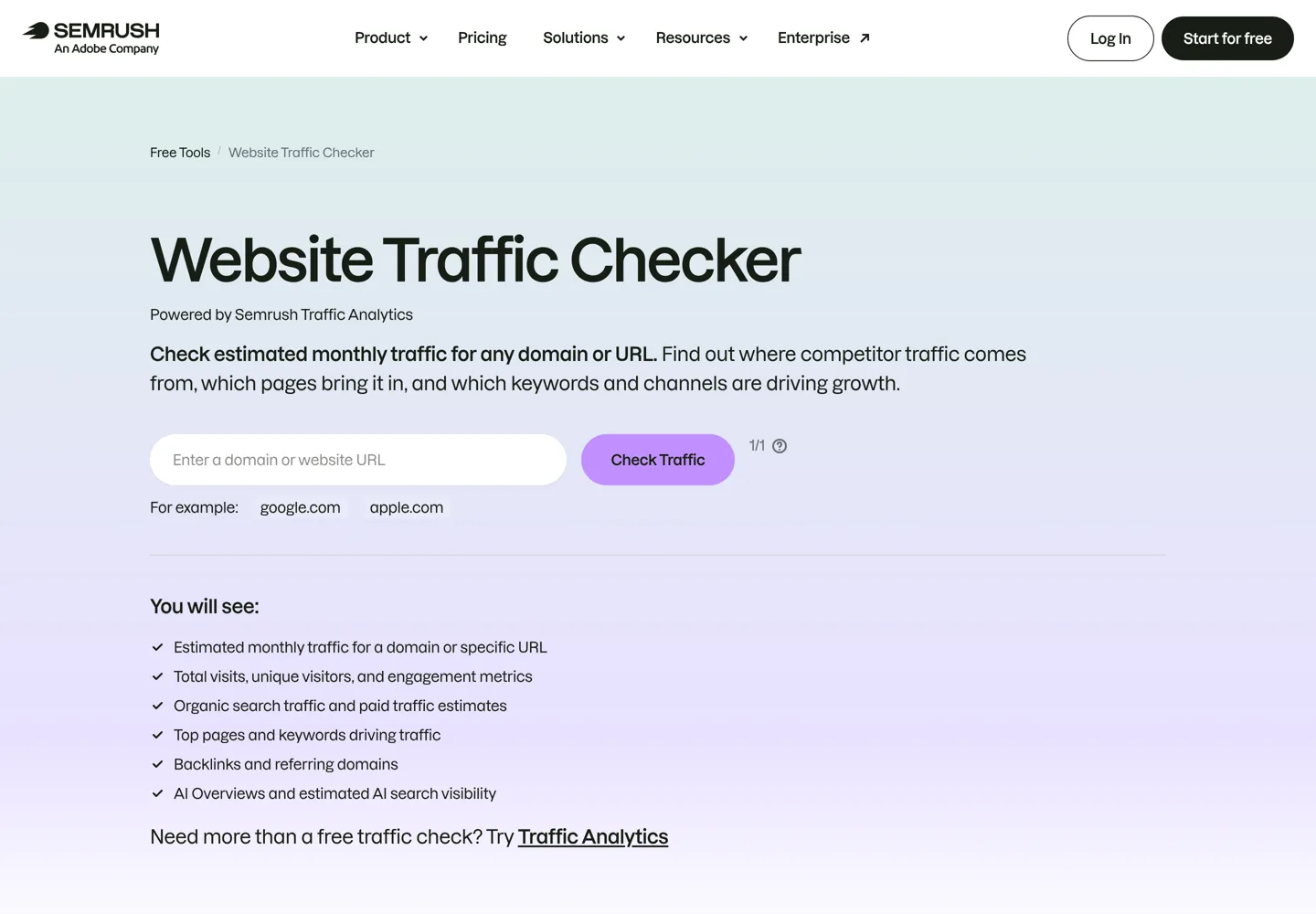
Semrush‘s free website traffic checker estimates monthly traffic for any domain or page: total visits, unique visitors, engagement, and organic search and paid traffic. Its Traffic Analytics is based on clickstream data about all of a site’s traffic sources, while its Domain Analytics estimates search traffic from keyword rankings, so the two can show different numbers. Semrush itself says the best use of these figures is benchmarking sites against each other, and that you should use Google Analytics for your own site.
6. Ahrefs
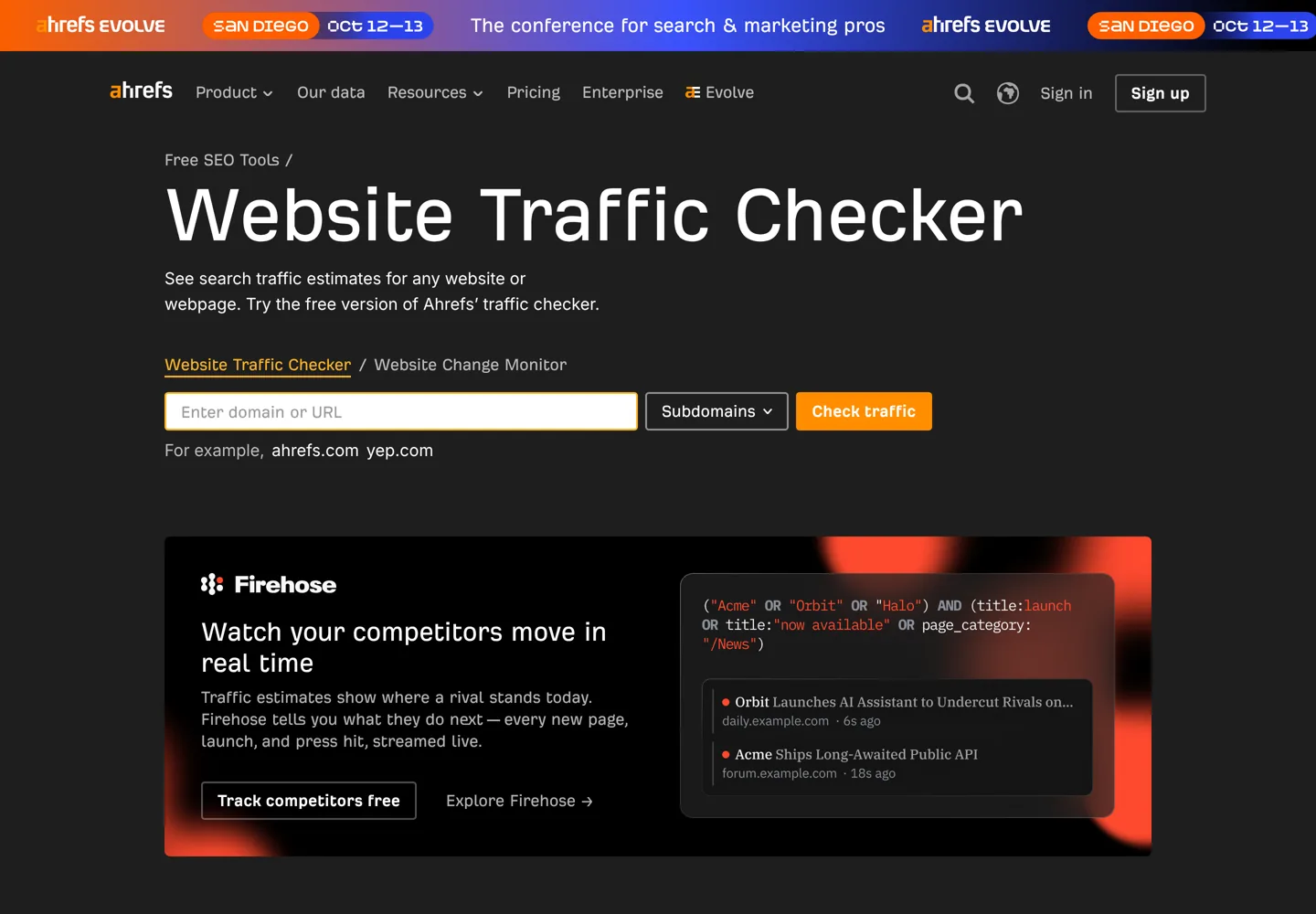
Ahrefs‘ free Website Traffic Checker shows search traffic estimates for any website or webpage. It covers search traffic, so it’s best for seeing how much a blog gets from Google and which pages bring it in, rather than its total visitors.
7. Similarweb
Similarweb has a free website traffic checker for estimated visits and a site’s ranking, with paid plans for deeper competitor research. Like every estimate tool, it may show little or no data for a very small blog.

How to check a Blogger (Blogspot) blog’s traffic
- Your own Blogspot blog: open Stats in Blogger for a quick look, connect Google Analytics in Settings for full detail, and verify the blog in Google Search Console to see your Google searches.
- Someone else’s Blogspot blog: enter its address in Semrush’s, Ahrefs’ or Similarweb’s free checker. Expect rough numbers, and no data at all for very small blogs.
- Compare like with like: check two blogs in the same tool on the same day, rather than mixing numbers from different tools.
If you’re thinking of moving, see WordPress vs Blogger and how to move from Blogger to WordPress.
Set up Search Console for your blog
Search Console only shows data for sites you’ve added and verified, so do this once for every blog you run:
- Add a property. A Domain property covers every version of your address (http, https, www and subdomains). A URL-prefix property covers one exact address, which is the usual choice for a Blogspot address such as yourblog.blogspot.com.
- Choose a verification method and follow the steps Google shows. You can verify straight away or save and come back later.
- Wait for data. Once verified, check the Performance report after a few days and then weekly.
On WordPress, most SEO plugins can add the verification tag for you; the WordPress SEO tutorial walks through it.
Where your traffic comes from
Google Analytics sorts visitors into channels by how they arrived. These are the ones a blog sees most, as Google defines them:
| Channel | How visitors arrived |
|---|---|
| Organic Search | Non-ad links in search results, including Google’s AI Overviews and AI Mode |
| Direct | A saved link or typing your address |
| Referral | Non-ad links on other sites and apps, such as blogs and news sites |
| Organic Social | Non-ad links on social sites like Facebook or X |
| Organic Video | Non-ad links on video sites like YouTube, TikTok or Vimeo |
| Links in emails, such as your newsletter |
For most blogs, Organic Search is the channel to grow, because it keeps sending visitors long after a post is published. If one channel brings almost all your traffic, a single change there can cut it sharply, so it’s worth building a second, such as an email list.
Why traffic numbers never match
- Different things are counted. Search Console counts clicks from Google Search; Analytics counts users and sessions from every source; Blogger Stats and Jetpack count views.
- Different filters. Tools treat bots, repeat visits and blocked trackers differently. Some visitors block analytics scripts entirely.
- Estimates aren’t measurements. Semrush, Ahrefs and Similarweb model traffic from outside data, so they can be far from the real figure for any one site.
- Different time zones and date ranges. Check that both tools use the same period before comparing.
Checking a blog’s traffic before you buy it
If you’re buying a blog, don’t rely on estimate tools or screenshots. Ask the seller for read-only access to the blog’s Google Analytics and Search Console, look at at least a year of data, and check that traffic comes from search rather than from a short burst of social or paid visitors. Then compare the trend with an estimate tool: if the seller’s numbers rise while every estimate falls, ask why. Marketplaces can help here; some show verified traffic and revenue on their listings. The guide to buying a blog has the full checklist.
What to do with your traffic numbers
- Find posts close to page one in Search Console (average position 8 to 20) and improve them first; see on-page SEO.
- Find the searches you don’t cover yet and plan new posts with the best keyword research tools.
- Turn traffic into income once it grows; the guide to earning money from a blog covers every method.
- On WordPress, make sure your setup helps search engines with the WordPress SEO tutorial.
Questions people ask
How can I check my blog traffic for free?
Connect your blog to Google Search Console for Google searches and clicks, and to Google Analytics for every visitor. On Blogger you can also open Stats; on WordPress, Jetpack Stats is free.
How do I check Blogger (Blogspot) traffic?
Open Stats in your Blogger dashboard for a quick view. For full detail, add your Google Analytics "G-" ID in Settings under Google Analytics Measurement ID, and verify the blog in Search Console.
Can I see how much traffic another blog gets?
Only as an estimate. Semrush's, Ahrefs' and Similarweb's free checkers model a site's traffic from outside data. Use them to compare blogs within the same tool, not as exact numbers.
Why are my Google Analytics and Search Console numbers different?
Search Console counts clicks from Google Search only; Analytics counts users and sessions from every source, and some visitors block analytics scripts. Different filters and date ranges add to the gap.
How long until Google Analytics shows data for Blogger?
Google says it can take up to 24 hours after you add your measurement ID for data to appear.
Is Jetpack Stats free?
Jetpack says Stats is available free for any type of site and any amount of traffic. A paid plan adds UTM stats, device stats, and region and city locations.
Sources
- Performance report (Search Console Help) support.google.com · checked October 11, 2026
- Realtime report (Analytics Help) support.google.com · checked October 11, 2026
- Use Analytics with Blogger (Blogger Help) support.google.com · checked October 11, 2026
- Blogger: Set up your Google tag (Analytics Help) support.google.com · checked October 11, 2026
- Jetpack Stats jetpack.com · checked October 11, 2026
- Jetpack Stats support jetpack.com · checked October 11, 2026
- Semrush website traffic checker www.semrush.com · checked October 11, 2026
- Traffic Analytics vs Domain Analytics (Semrush KB) www.semrush.com · checked October 11, 2026
- Ahrefs Website Traffic Checker ahrefs.com · checked October 11, 2026
- Similarweb website traffic checker www.similarweb.com · checked October 11, 2026
- Default channel group (Analytics Help) support.google.com · checked October 11, 2026
- Add a website property (Search Console Help) support.google.com · checked October 11, 2026
- Blogger: about www.blogger.com · checked October 11, 2026

Building websites since 2006: 500+ web projects of every size and $300K+ in website deals sold or brokered. Founder of A Digital Motive and DigiFlippers. I share the whole process here, plainly.
Founder of A Digital Motive and DigiFlippers