
- Getting up earlier only helps if you also sleep enough.
- The NHS suggests a regular sleep routine, even on days off.
- Keep your phone off until your first focused block is done.
- A morning walk helps toward the NHS's 150 active minutes a week.
- Spend your best morning hours on writing, before email.
A good morning routine for bloggers does one job: it gets you from waking up to your most important writing with a clear head, before email and social media take over the day. It doesn’t need a 5 a.m. alarm, cold showers or an hour of rituals. It needs enough sleep, a consistent start, a little movement, a plan for the day and a protected block for your best work. This guide sets out a seven-step routine for bloggers and online business owners working from home, with sleep and activity advice from the NHS, checked on 12 October 2026.
Still deciding whether working from home suits you? Our guide to the benefits of working from home covers the pros and cons. This page is about how to start each working day.

Do you need to get up earlier?
Not necessarily. Getting up earlier only helps if you also go to bed earlier; otherwise you’re trading sleep for time, and tired writing is slow writing. What matters more is that your start is consistent and that your best hours go to your most important work. If you focus best at 6 a.m., protect that time. If your mind is sharpest at 10 a.m., build your routine to reach your writing then. An earlier start is useful when your mornings are the only quiet time you have, for example before children wake up or before a day job, and even then, the extra minutes only count if they go to something that matters.
Step 1: Prepare the night before
A good morning starts the evening before. Spend five minutes writing tomorrow’s most important task and what you need for it, so you don’t spend the morning deciding. Then wind down. The NHS suggests trying not to use phones, tablets or computers for an hour before bed, because the light from screens can make it harder to fall asleep, and suggests a calm bedtime routine to help you prepare for sleep. Reading a book is an easy replacement for scrolling.
Step 2: Keep a regular wake-up time
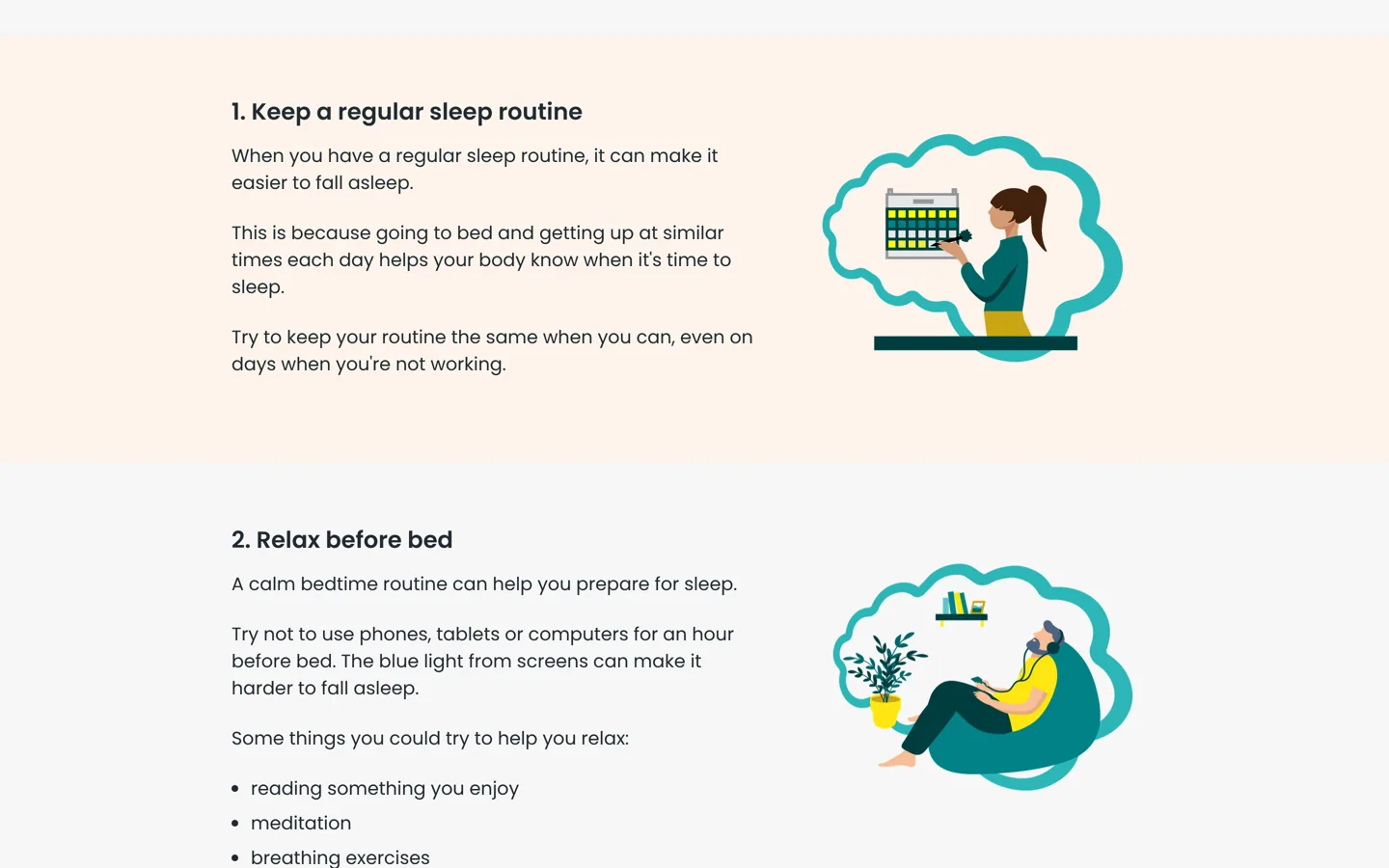
The NHS says a regular sleep routine can make it easier to fall asleep, and suggests keeping it the same when you can, even on days when you’re not working. For bloggers who set their own hours, this is the hardest step and the most useful one. Choose a wake-up time you can keep seven days a week, then work backwards to a bedtime that gives you enough sleep. If you’re tempted to press snooze, put the alarm across the room so you have to get up to turn it off.
Step 3: Don’t start with your phone
Checking email, messages and social media first thing hands your morning to other people’s priorities, and it’s hard to stop once you’ve started. Leave notifications off until your first focused block is done. If you use your phone as an alarm, put it face down and move it out of reach once you’re up. The first thing you read in the morning shapes what you think about for the next hour, so make it your own plan rather than someone else’s request.
Step 4: Move your body
Bloggers and home workers can easily spend the whole day sitting. A short walk, some stretching or a workout in the morning gets you moving before you sit down to write, and walking outside is a natural replacement for the commute you no longer have. The NHS recommends adults do at least 150 minutes of moderate-intensity activity a week, or 75 minutes of vigorous activity, plus strengthening activities on at least two days a week, and to break up long periods of sitting with some activity. A 20-minute walk each weekday morning covers most of the moderate target on its own.
Step 5: Eat, drink and get ready as if you were going out
Have breakfast if it suits you, drink some water, and get dressed for work. It sounds small, but changing out of what you slept in helps signal that the working day has started, especially when your office is a corner of your home. If you drink tea or coffee, the NHS notes that caffeine can make you feel more awake, which is also why it suggests a warm milky drink or herbal tea instead in the evening.
Step 6: Plan the day in five minutes
Look at the task you wrote down last night and decide when you’ll do it. Then add no more than two or three other tasks for the day. Some people like to write a page of thoughts first, getting worries and ideas out of their head so they can focus; others go straight to the plan. Either way, keep it short. Our guide to productivity for entrepreneurs explains how to choose the tasks that matter.
Step 7: Start with your most important work
This is the point of the whole routine. Before email, before social media, before admin, spend your first focused block on the work that grows your blog: writing a new post, updating an old one, or building the page that earns money. Even 60 to 90 minutes a day adds up to several articles a month. When the block is finished, you’ve already had a productive day, and everything after it is a bonus.
What to do in the morning, and what to leave for later

Your mornings are usually your clearest hours, so match the work to your energy. Creating needs attention: writing, outlining, editing and planning a new page all go best before your mind fills with messages. Reacting can wait: email, comments, social media, invoices and formatting images take less thought and fit the afternoon well. If you only change one thing after reading this page, move one creative task to the start of your day and one reactive task to the end.
A sample morning routine for bloggers
- 7:00: wake up at your regular time; water, no phone.
- 7:10: 20-minute walk or stretch.
- 7:35: breakfast, get dressed.
- 8:00: five-minute plan for the day.
- 8:05: focused writing block, notifications off.
- 9:30: short break, then email and messages.
Shift the times to suit your life. A parent might start writing at 5:30 before the house wakes; someone with a day job might do the walk at lunch and the writing block in the evening. The order matters more than the clock.
Routines for different situations
- Blogging alongside a job: use a short morning block of 30 to 45 minutes for writing, and do admin and promotion in the evening when your energy is lower.
- Parents: plan the writing block for school hours or before the children wake, and accept that some days it won’t happen.
- Full-time bloggers: protect the first two to three hours for creating, and keep calls and email for the afternoon.
- Night owls: keep the same steps but shift them later; a consistent start matters more than an early one.
How to build the routine
Don’t try all seven steps at once. Start with two: a regular wake-up time and a writing block before email. Once those feel normal, usually after a few weeks, add another step. If you miss a day, simply restart the next morning; a routine is something you return to, not something you fail at. Keep a simple tick list for the first month so you can see your progress, and adjust anything that doesn’t fit your life.
An evening routine that makes mornings easier
Most morning routines fail the night before. Finish work at a set time and close the laptop. Tidy your workspace and write tomorrow’s first task on a note where you’ll see it. Lay out anything you’ll need, such as walking shoes or the notes for your next post. Then give yourself time to wind down: dim the lights, read, talk, or do something relaxing away from screens. Going to bed at roughly the same time each night is what makes a regular wake-up time possible without an alarm-clock battle.
Morning routine checklist
- Tomorrow’s most important task is written down.
- Phone is out of reach overnight, notifications off.
- Wake-up time is the same as yesterday.
- Some movement before sitting down to work.
- A five-minute plan with no more than three tasks.
- The first block goes to creating, not reacting.
When your routine breaks
Illness, travel, a new baby or a busy season at work will break any routine. When it happens, shrink it rather than abandoning it: a five-minute plan and 20 minutes of writing still keep the habit alive. When life settles again, rebuild the routine step by step, starting with the wake-up time.
Common mistakes
- Cutting sleep to get up earlier.
- Copying a celebrity routine that doesn’t fit your life or energy.
- Starting with email and never getting to your writing.
- A routine so long it takes half the morning.
- Working in pyjamas on the sofa, so work and rest blur together.
- Giving up after one bad week instead of restarting.
The best morning routine is the one you’ll actually keep. Make it simple, protect your sleep, and give your first good hours to the work that matters. Our guide to setting blogging goals helps you decide what that work should be.
Questions people ask
What is a good morning routine for bloggers?
Wake at a regular time, keep your phone off, move for a few minutes, get ready, plan the day in five minutes, then write before checking email.
Should I wake up at 5 a.m. to be successful?
Only if you also go to bed early enough and focus best then. A consistent start and protected writing time matter more than an early alarm.
How can I sleep better so mornings are easier?
The NHS suggests a regular sleep routine, even on days off, a calm bedtime routine and avoiding phones, tablets and computers for an hour before bed.
How much exercise should I fit into my routine?
The NHS recommends at least 150 minutes of moderate activity or 75 minutes of vigorous activity a week, plus strength activities on two days, and breaking up long periods of sitting.
Should I check email first thing in the morning?
It's better not to. Email hands your best hours to other people's priorities; do your most important work first.
How long does it take to build a morning routine?
Start with two steps and add more once they feel normal, usually after a few weeks. If you miss a day, restart the next morning.
Sources
- How to fall asleep faster and sleep better (NHS Every Mind Matters) www.nhs.uk · checked October 12, 2026
- Physical activity guidelines for adults aged 19 to 64 (NHS) www.nhs.uk · checked October 12, 2026

Building websites since 2006: 500+ web projects of every size and $300K+ in website deals sold or brokered. Founder of A Digital Motive and DigiFlippers. I share the whole process here, plainly.
Founder of A Digital Motive and DigiFlippers