
- Big goals fail when you expect fast results from slow work.
- Start with small actions and increase them gradually.
- Pair each result goal with actions you fully control.
- Track clicks in Search Console and sign-ups in Analytics.
- Review monthly; search changes can take months to show.
Good blogging goals turn a big wish, such as “earn a full-time income from my blog”, into small steps you control: posts published, pages improved, emails sent. The secret to big goals isn’t working flat out from day one. It’s starting with small, steady actions and increasing them gradually, because the people whose results you admire usually took months or years to get there. This guide shows how to set traffic, income and publishing goals, break them into weekly actions, track them with free tools such as Google Search Console, and keep going when results are slow, checked on 12 October 2026.
Choosing how your blog will earn? Our guide to earning money from a blog covers the income options. This page is about setting the goals and reaching them.

Why big goals fail
We see people who have what we want, a popular blog, a steady income, a business that runs well, and we try to do what they do, all at once. We work intensively for a few weeks, the results are tiny, and we decide it’s too much and give up. A while later we try again, work even harder, and the same thing happens.
The problem isn’t that you’re not good enough. It’s that you’re trying to reach in weeks the level that took them months or years. You expect big short-term results from work that pays off in the long term, so you burn out. A great goal is really the sum of many small ones.
Start small, then increase gradually
Begin with actions so small they don’t tire you: one post a week, 20 minutes of research a day, one outreach email. Once that feels normal, increase it a little: a slightly longer post, a second email, a monthly update to an old article. Make the increases so gradual that you barely notice them. Step by step you’ll be doing what once seemed impossible, and it’ll feel easier because it’s become a habit.
Keep increasing only as long as you want to grow. If where you are is enough for your life, staying there isn’t failure. Not everyone wants an ever-larger blog; some people want a steady side income and time with their family. Set goals for the life you want, not the one someone else has.
How to set blogging goals
A useful goal is specific, measurable, within your control at least in part, relevant to what you want from the blog, and has a date. “Get more traffic” is a wish. “Publish 24 helpful articles on my main topic by June” is a goal you can act on. Most blogs need three kinds of goals:
- Action goals you fully control: articles published, old posts updated, emails sent, hours spent writing.
- Traffic goals you influence: clicks from Google, newsletter subscribers, returning readers.
- Income goals that follow the other two: affiliate commission, ad earnings, client enquiries, product sales.
Set your main goal as a result, such as income or traffic, but plan your weeks around the action goals. You can’t decide how many people click your posts this month, but you can decide how many good posts you publish.

Blogging goals for each stage
- Just starting (first 6 months): focus almost entirely on action goals. Publish consistently on one topic, set up Search Console and Analytics, and add an email sign-up form. Traffic is usually small at this stage, so measure yourself by what you publish.
- Growing (some traffic): add traffic goals. Find the posts that already get impressions, improve them, and write more on the same topics. Start one income stream that fits your readers.
- Established (steady traffic): add income and efficiency goals. Increase earnings per visitor, update your best posts every year, and decide which tasks to hand to a freelancer or automate.
Moving to the next stage too early is a common reason for frustration. A new blog with an income goal and no traffic yet sets itself up to feel like a failure, even when it’s doing fine.
Break the big goal down
- Yearly goal: for example, 5,000 monthly clicks from Google and a first $500 month from affiliate links.
- Quarterly milestones: 12 new articles on one topic, 10 old posts updated, an email sign-up form on every page.
- Weekly actions: one new article, one updated article, one promotion task.
- Daily habit: 60 minutes of writing or research, at the same time each day.
The numbers above are only an example; set your own based on where you start and how much time you have. Our guide on productivity for entrepreneurs explains how to fit the weekly actions into your calendar.
Track your progress with free tools
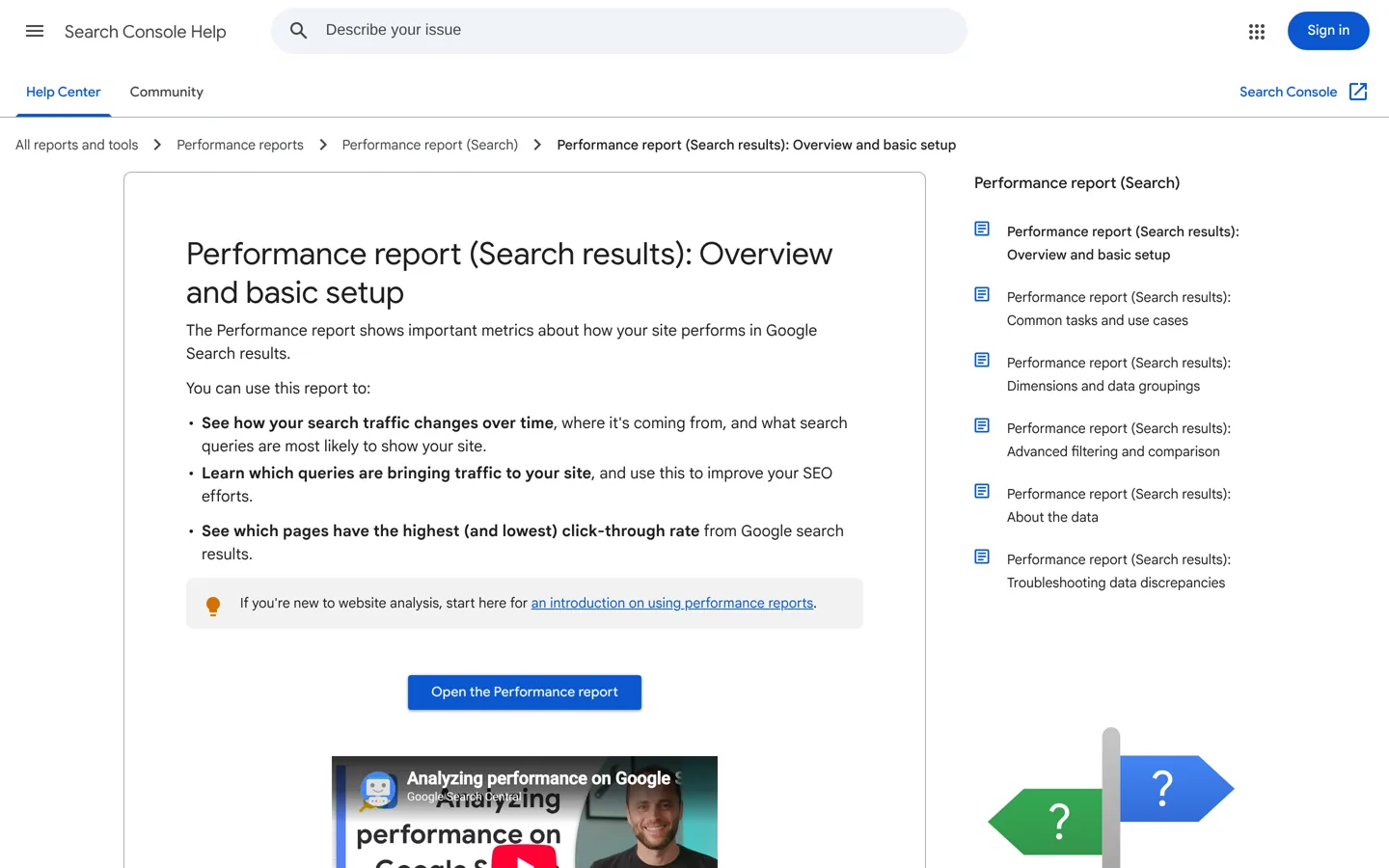
Google Search Console shows how your site performs in Google Search. Its Performance report counts clicks (the number of times someone clicked through to your site from search results), impressions (how many times your site appeared in results), click-through rate and average position. The default view shows the past three months, and you can see which queries and pages bring the traffic, compare date ranges and export the data.
Google Analytics shows what visitors do once they arrive. Any event you collect can be marked as a “key event”, an action that’s particularly important to your success, such as a newsletter sign-up or a click on an affiliate link, so you can see how many people do it and which channels bring them. Our guide to free blog traffic tools covers both in more detail.
Be patient with search results
Search traffic takes time. Google’s SEO Starter Guide says some changes may take effect in a few hours and others could take several months, and that you’ll usually want to wait a few weeks to assess whether your work had a beneficial effect. It also notes that not every change makes a noticeable difference. So judge your traffic goals monthly or quarterly, not daily, and keep working on the action goals in the meantime.
Review monthly
Once a month, spend half an hour on a simple review:
- Did you hit your action goals? If not, what got in the way?
- What changed in clicks, subscribers and income compared with last month and the same month last year?
- Which posts brought the most clicks or sign-ups? Plan more like them.
- Is the goal still right? Adjust the target if your situation has changed.
Write the answers down. After a few months, you’ll see patterns that tell you where to put your time.
Stop making excuses (kindly)
“I don’t have time”, “I’m not an expert yet”, “the niche is too crowded”: most excuses are fears in disguise. Answer each one with a smaller action. No time? Write for 20 minutes instead of two hours. Not an expert? Write about what you’re learning, as you learn it. Crowded niche? Pick a narrower topic you can cover better than anyone else. When you miss a week, don’t punish yourself; restart with the smallest version of the habit. Progress comes from showing up again, not from never missing.
What to do when you miss a goal
Missing a goal is information, not a verdict. Ask three questions. Was the goal realistic for the time you had? Did you do the actions but the results didn’t follow, or did the actions not happen? And did something outside your control change, such as a busy month at work or a change in search results? If the actions didn’t happen, make them smaller or schedule them better. If they happened but the results didn’t come, give them longer or change the kind of content. Then set the next month’s target and carry on.
Staying motivated when results are slow
Motivation comes and goes, so don’t rely on it. Rely on habits and on seeing progress. Keep a simple log of every article published and every milestone reached, and look back at it when you feel stuck. Share your goals with a friend or a group of bloggers who’ll ask how it’s going. Celebrate action goals, not just results: publishing your 25th article is an achievement, whatever the traffic says that week. Inspiring quotes can lift your mood for a moment, but a log of what you’ve actually done is far more convincing.
A sample blogging goal plan
- Goal for the year: grow from 500 to 3,000 monthly clicks from Google and earn a first affiliate commission.
- This quarter: publish 12 articles on one topic and update 6 older ones.
- This week: research and publish one article; add internal links from two older posts.
- Every day: 45 minutes of writing before checking email.
- Every month: 30-minute review in Search Console and Analytics; adjust the plan.
This is an example of the structure, not a promise of results; your numbers will depend on your topic, time and starting point.
Common mistakes
- Only result goals, with no actions you control.
- Starting too big, then burning out within weeks.
- Checking traffic daily and reacting to normal ups and downs.
- Copying someone else’s goals instead of setting your own.
- Never reviewing, so the same plan continues even when it isn’t working.
Great things aren’t done on impulse; they’re built by joining small things together. Choose one goal, break it down, and do this week’s small step.
Questions people ask
What are good blogging goals?
A yearly result goal, such as monthly clicks or income, broken into action goals you control: articles published, posts updated and promotion tasks each week.
How do I achieve big goals?
Start with small actions that don't tire you, increase them gradually, and review your progress monthly instead of expecting fast results.
How do I track blog traffic goals?
Use Google Search Console's Performance report for clicks, impressions, click-through rate and position, and Google Analytics key events for sign-ups and affiliate clicks.
How long does it take to see results from SEO?
Google's SEO Starter Guide says some changes take effect in hours and others take several months, and suggests waiting a few weeks before judging a change.
How do I stop making excuses?
Answer each excuse with a smaller action: 20 minutes instead of two hours, writing about what you're learning, or a narrower topic.
How often should I review my blogging goals?
Monthly for progress, and quarterly to adjust the targets if your situation or results have changed.
Sources
- Performance report (Search Console Help) support.google.com · checked October 12, 2026
- About key events (Google Analytics Help) support.google.com · checked October 12, 2026
- SEO Starter Guide (Google Search Central) developers.google.com · checked October 12, 2026

Building websites since 2006: 500+ web projects of every size and $300K+ in website deals sold or brokered. Founder of A Digital Motive and DigiFlippers. I share the whole process here, plainly.
Founder of A Digital Motive and DigiFlippers