
- Google names optimised forum signatures as link spam.
- Forums should mark user links with rel="ugc".
- WordPress adds rel="nofollow ugc" to comment links.
- Forums are best for visitors, ideas and reputation.
- Link only when an article genuinely answers the question.
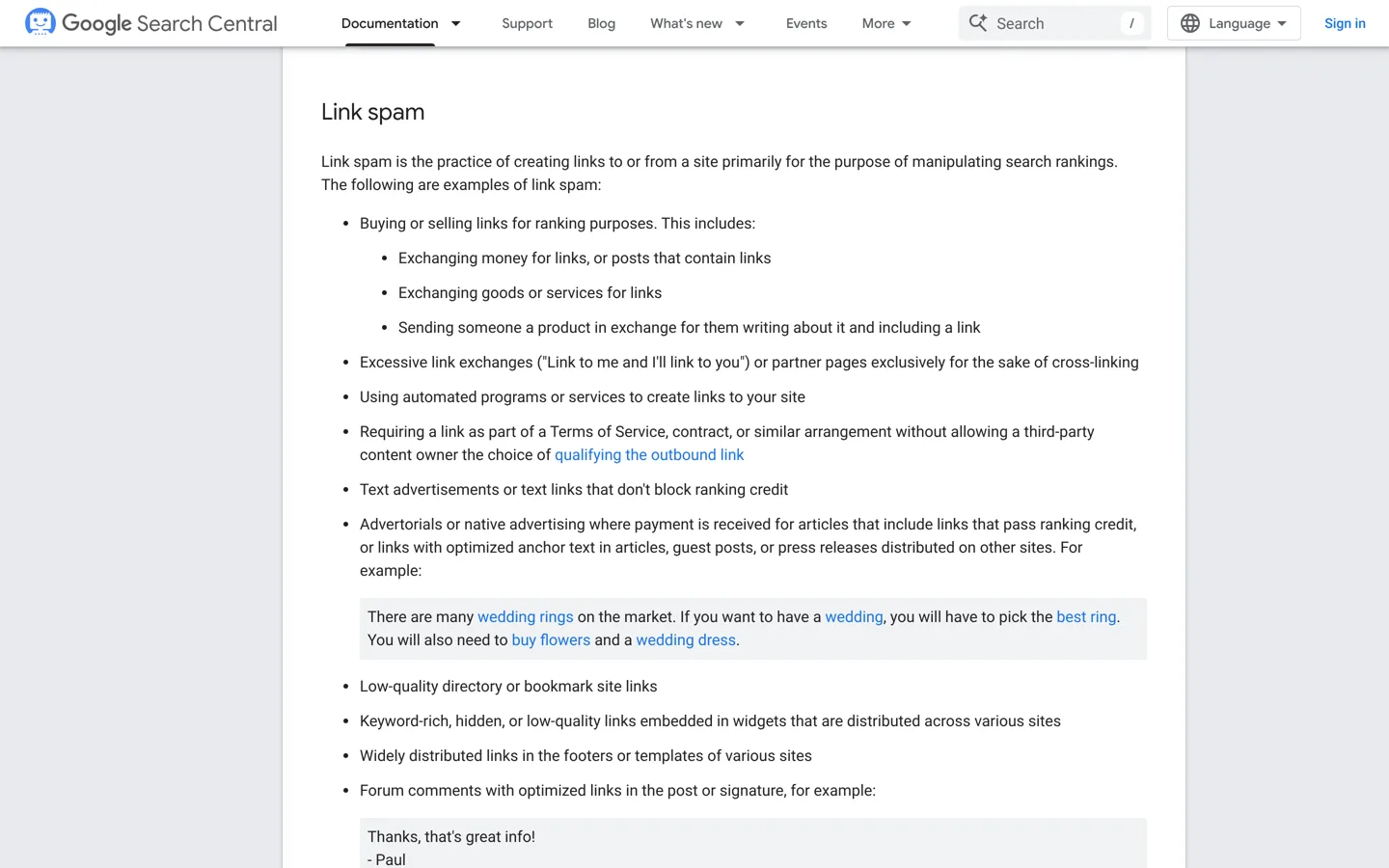
Forum backlinks are links to your site posted in online discussion forums, in a reply, a profile or a signature. They can still be worth having, but not for the reason most “dofollow forum lists” promise. Google’s spam policies name “forum comments with optimized links in the post or signature” as an example of link spam, and Google recommends that forums mark user links with rel=”ugc”. WordPress, for example, adds rel=”nofollow ugc” to links in comments. The real value of forums is targeted visitors, reputation and the natural links that follow. This guide shows how to use forums for that, checked on Google’s and WordPress’s own documentation on 12 October 2026.
Thinking about swapping links with other site owners? Our guide to backlink exchange programs explains the risks. This page is about forums.

What Google says about forum backlinks
Google’s spam policies define link spam as “creating links to or from a site primarily for the purpose of manipulating search rankings”. Its list of examples includes buying or selling links that pass ranking credit, excessive link exchanges, automated link building, low-quality directory or bookmark links, and “forum comments with optimized links in the post or signature”. The example Google gives is a reply that says “Thanks, that’s great info!” followed by a signature stuffed with keyword phrases for a pizza restaurant.
Google also says sites can mark links to tell it what they are. Its documentation on qualifying outbound links recommends the ugc value for “user-generated content (UGC) links, such as comments and forum posts”, alongside sponsored for paid links and nofollow for links you don’t want to endorse. Since 2019, Google treats these attributes as hints for ranking rather than strict instructions.
Why “dofollow forum lists” don’t help
Lists of “dofollow forums” promise that a link in your profile or signature will pass ranking value. In practice there are three problems:
- Many forums mark user links. WordPress’s own code adds rel=”nofollow ugc” to links in comments, and Google recommends the same for forum posts, so many links in these lists are marked anyway.
- Google tells link spam apart. A link that exists only to manipulate rankings, such as a keyword-stuffed signature, is the example Google itself uses.
- Forums that allow anything attract spam. A forum with unmoderated profile links is usually full of them, and being part of that neighbourhood does your site no favours.
That’s why this page doesn’t include a list of forums to drop links on. What follows is how forums actually help a blog.
What forums are genuinely good for

- Targeted visitors. A helpful answer with a link to a page that solves the problem brings readers who already care about the topic.
- Content ideas. The questions people ask again and again are the posts your blog should write next. Our guide to searching for keywords on Google shows how to check demand.
- Reputation. Being known as the person who gives good answers leads to invitations, collaborations and mentions.
- Natural links. When people find your answers useful, some will link to your articles from their own sites, which is the kind of link Google’s policies don’t object to.
How to choose which forums to join
Not every forum is worth your time. Before you commit, spend ten minutes reading each candidate and look for these signs:
- Recent, real questions: new threads every day or two, asked by people who sound like your readers.
- Active moderation: spam removed quickly, clear rules pinned at the top, and moderators who reply.
- Helpful answers that get thanked: a sign the community values quality over self-promotion.
- Few signature links and no link-dumping threads: forums full of “post your link here” threads are exactly the neighbourhood to avoid.
- A clear fit with your topic: a small forum about exactly your niche is often worth more than a huge general one.
Two or three good forums, visited regularly, beat twenty you post in once. Communities remember people who show up and help; they ignore, or ban, people who appear only to drop links. Pick forums you’d read even if you had no website to promote.
Forums, Q&A sites and communities
The same approach works beyond classic forums: question-and-answer sites, community groups on social networks, product communities and chat-based communities. Each has its own rules on links and self-promotion, so read them first. On fast-moving platforms, an answer is seen for a short time, so the main benefit is the conversation and the connections it creates. On search-friendly Q&A pages, a strong answer can keep sending readers for years, which makes it worth writing carefully.
Whatever the platform, the measure is the same: would this answer be useful if the link weren’t there? If yes, the link is a helpful extra. If not, it’s spam.
How to use forums the right way
- Choose two or three forums where your readers actually ask questions: an active community in your niche, a product’s official forum, or a well-moderated subforum.
- Read the rules on self-promotion and links before you post. Many communities allow links only where they’re directly relevant, or only after you’ve taken part for a while.
- Set up a real profile with your name, a short bio and your website, where the forum allows it.
- Answer questions fully in the post itself. The reply should solve the problem even if nobody clicks.
- Link only when it adds something, such as a step-by-step guide or a tool that goes deeper than a reply can. Use plain wording, not keyword anchors.
- Keep signatures simple: your name and site, or nothing. No keyword phrases.
- Follow up when someone replies, and thank people who help you.
An example of a good forum answer
An illustration. Someone asks how to stop WordPress comment spam. A weak reply says “Check my blog for tips!” with a link. A strong reply explains the three settings that cut most spam, names the free tools that help, and ends: “I wrote up the full settings with screenshots here, if it’s useful,” with a link to that one article. The strong reply helps even if nobody clicks, and readers who want more have a reason to visit.
How to measure whether forums are worth it
- Referral traffic: in your analytics, look at visits from each forum, and which pages they land on.
- Engagement: do forum visitors read further, sign up to your newsletter or return?
- New links: Google Search Console‘s Links report shows sites that link to you and your most-linked pages. Google notes it shows a sample rather than every link, so treat it as a trend.
- Time spent: if a forum takes hours a week and sends almost nobody, move your time elsewhere.
Give each forum at least two months before you judge it: reputations take time, and a single good answer can keep sending visitors long after you’ve written it. Keep a simple note of where you posted, the date and the page you linked, so you can match visits in your analytics to the answers that sent them.
For checking links in more detail, our guide to free backlink checker tools compares the options.
If you run a forum or comment section
The same rules apply in reverse. Google’s spam policies list spammy forum posts and blog comment spam as examples of user-generated spam, and recommend preventing abuse of your site’s public areas. Keep links in user content marked with ugc (WordPress does this for comments by default), moderate new members’ first posts, and remove accounts that exist only to post links. A clean community is more useful to readers and safer for your site.
Better ways to earn links than forums
- Publish something worth citing: original data, a clear guide, a free template or tool.
- Answer journalists and bloggers who ask for expert input, where your knowledge fits.
- Build relationships with sites in your niche by sharing their work and collaborating on useful content.
- Improve your own pages so the people who find you link to you; our on-page SEO checklist covers the basics.
What to avoid
- Keyword-stuffed signatures and profiles, exactly the example in Google’s policy.
- Posting the same reply in many threads or forums.
- Buying “forum backlink packages” or using tools that create forum accounts and posts automatically; Google lists automated link building as link spam.
- Dropping a link in a thread you haven’t read.
- Arguing with moderators when a link is removed. Read the rules, adjust and carry on helping; moderators notice members who take feedback well.
A 20-minute weekly forum routine
- 5 minutes: scan new questions in your two or three forums.
- 10 minutes: write one or two thorough answers, linking only where an article genuinely helps.
- 5 minutes: note the questions you couldn’t answer well; they’re next month’s blog posts.
Done steadily, this builds a reputation, sends readers who care, and gives you a list of topics people are actually asking about, which is worth more than any number of signature links. For the bigger picture of how search works, see our SEO basics guide.
Questions people ask
Do forum backlinks help SEO?
Rarely as ranking signals. Google lists forum comments with optimised links in the post or signature as link spam, and many forums mark user links with ugc or nofollow. Forums help more through visitors, ideas and the natural links that follow.
Are there dofollow forums?
Some forums don't mark links, but Google's spam policies look at the purpose of a link, not just the attribute. A keyword-stuffed signature is link spam either way.
What does rel="ugc" mean?
It marks a link as user-generated content, such as comments and forum posts. Google recommends it for those links, and treats it as a hint.
Does WordPress add nofollow to comment links?
Yes. WordPress adds rel="nofollow ugc" to links in comments.
Can I put my website in my forum signature?
Where the forum allows it, a simple signature with your name and site is fine. Avoid keyword phrases, which is the exact example Google uses for link spam.
How do I see which sites link to me?
Use Google Search Console's Links report. It shows a sample of external links and your most-linked pages, not every link.
Sources
- Spam policies for Google web search developers.google.com · checked October 12, 2026
- Qualify your outbound links to Google developers.google.com · checked October 12, 2026
- Evolving "nofollow" (Google Search Central Blog, 2019) developers.google.com · checked October 12, 2026
- wp_rel_ugc() (WordPress Developer Resources) developer.wordpress.org · checked October 12, 2026
- Links report (Search Console Help) support.google.com · checked October 12, 2026

Building websites since 2006: 500+ web projects of every size and $300K+ in website deals sold or brokered. Founder of A Digital Motive and DigiFlippers. I share the whole process here, plainly.
Founder of A Digital Motive and DigiFlippers