- Agree deliverables, timeline and payment in writing first.
- Send regular updates and flag delays early.
- Deliver with a short explanation of what you did.
- Suggest one logical next project at delivery.
- Follow up at day 3, 30 and 90 after a project.
Repeat freelance clients come back for five reasons: the work solved their problem, working with you was easy, they knew what was happening at every stage, you made the next project obvious, and you stayed in touch afterwards. Most of that is decided in the first project, before you’ve sent the final file. This guide turns those reasons into a simple system for keeping first-time clients, from the kickoff call to the follow-up three months later, with notes on platform feedback and getting paid on time, checked on 12 October 2026.
Still looking for your first clients? Our guide to websites that pay for your skills covers where to start. This page is about keeping them.

Why repeat freelance clients matter
Every new client costs time before you earn anything: proposals, calls, quotes and onboarding. A returning client already trusts you, knows how you work and often needs less explaining, so the next project starts faster and usually runs more smoothly. Repeat clients also refer others, and on freelance marketplaces their feedback builds the reputation that wins new work. A few loyal clients make income steadier than a constant hunt for new ones, and they make planning easier: you know roughly what work is coming, so you can say no to projects that don’t fit and spend time improving your skills instead of only selling them.
1. Start with a clear brief and agreement
Most problems with clients start with a vague brief. Before you begin, agree in writing:
- What you’ll deliver, in specific terms: “five blog posts of about 1,500 words, with one revision each” rather than “some content”.
- What success looks like to the client, so you aim at the same target.
- The timeline, including when they’ll send what you need from them.
- The price and payment terms: deposit, instalments and when the final payment is due.
- What’s not included, and what extra work costs.
A short written summary after the kickoff call (“here’s what we agreed”) prevents most later disagreements and shows you’re organised. Ask how they prefer to communicate, by email, a chat tool or calls, and who else needs to approve the work, so feedback doesn’t arrive late from someone you’ve never met.
2. Communicate before they have to ask
Clients who wonder what’s happening start to worry. Set a rhythm, such as a short update every Friday, and keep to it. Say what’s done, what’s next and anything you need from them. If something will be late, tell them as soon as you know, with a new date and what you’re doing about it. Bad news early is far easier for a client to accept than a surprise at the deadline.
On marketplaces, responsiveness is visible too. Upwork’s help centre, for example, has guides on staying responsive to clients and on requesting mid-contract feedback, which lets you fix problems while there’s still time.
3. Deliver more than the file
The work itself has to be good, but the way you hand it over is what clients remember:
- Deliver on or before the date you agreed.
- Explain what you did and why, in a short note: the choices you made and how to use what you’ve delivered.
- Make it easy to use: files named clearly, instructions included, nothing they have to chase.
- Check it as the client will: open the files on their kind of device, test the links, read it once more.
- Offer one small, useful extra, such as a checklist, a short training video or a suggestion they didn’t ask for, without changing the scope.
4. Make the next project obvious

While you work, you’ll notice things the client could do next: the website pages that also need rewriting, the logo that needs social media versions, the site that would benefit from monthly updates. At the end of the project, suggest one or two of them, briefly and specifically, with an idea of the price. Some freelancers offer a simple monthly arrangement for ongoing work, such as a set number of hours or deliverables, which gives the client convenience and you steadier income.
Don’t push. “Here’s what I’d suggest next, if it’s useful” works better than a sales pitch, and leaves the decision with them. If they say not now, note why and when, and mention it again at a sensible moment.
5. Stay in touch after the project
- Ask for feedback a few days after delivery: what worked and what could have been better.
- Ask for a testimonial or review if they’re happy, and for permission to show the work in your portfolio.
- Check in after a month or two with something useful: how the work is performing, an idea, or an article they’d find interesting.
- Remember their dates: busy seasons, product launches or annual campaigns where they’ll need help again.
A short, genuine message every few months keeps you in mind for the next project without being pushy.
Platform feedback and reputation
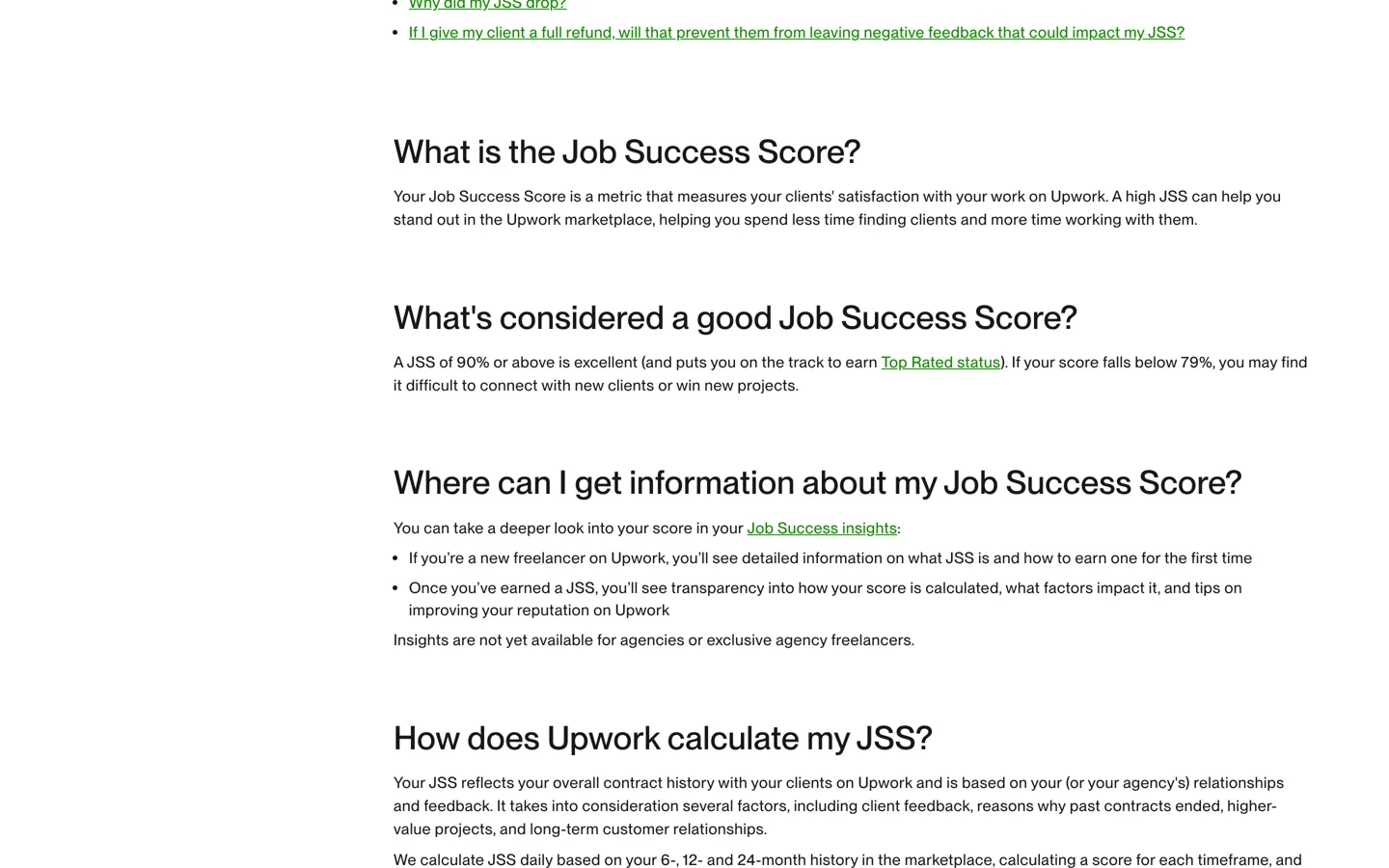
If you work through a freelance marketplace, each client’s feedback affects how future clients see you. Upwork, for example, describes its Job Success Score as a measure of clients’ satisfaction with your work, says a score of 90% or above is excellent and puts you on track for Top Rated status, and warns that below 79% you may find it difficult to win new projects. It also says the score takes into account client feedback, why past contracts ended, higher-value projects and long-term customer relationships, so repeat clients help directly. The habits on this page, clear agreements, regular updates and careful delivery, are exactly what earns good feedback.
Get paid on time, every time
Nothing ends a client relationship faster than an argument about money. Send clear invoices with the amount and the due date, and follow up politely when a payment is late. In the UK, GOV.UK explains that when businesses agree a payment date it must usually be within 60 days for business transactions, that without an agreed date a payment is late 30 days after the customer gets the invoice or after you provide the service if that’s later, and that you can claim “statutory interest” of 8% plus the Bank of England base rate on late business payments, unless your contract sets a different rate. Rules differ by country, so check yours, and put your payment terms in every agreement.
Handling criticism and revisions
Even good projects get feedback you didn’t expect. How you respond often matters more to the client than the problem itself. Thank them, ask questions until you understand exactly what they want changed and why, and confirm the changes in writing before you start. If the request is within the agreed revisions, make the changes quickly and without fuss. If it’s new work, say so kindly and give a price: “Happy to do that; it’s outside what we agreed, so it would be an extra X.” Clients respect clear boundaries when they’re explained politely.
When something genuinely went wrong on your side, say so plainly, fix it, and tell them what you’ll do differently next time. A mistake handled well can build more trust than a project that went perfectly.
When to let a client go
Not every client should become a repeat client. If someone repeatedly pays late, keeps expanding the work without paying for it, or treats you badly, it’s fine to finish the current project professionally and decline the next one. Your time is better spent on clients who value your work. A polite “I’m fully booked for that period, but here’s someone who may be able to help” keeps it professional.
A simple client follow-up system
- Day 0 (delivery): deliver with a short explanation and how to use the work.
- Day 3: ask for feedback and, if they’re happy, a testimonial.
- Day 7: suggest the logical next project, if there is one.
- Day 30: check in with something useful.
- Day 90: a short update or idea relevant to their business.
Keep a simple spreadsheet of clients, the last project, the next check-in date and notes. Ten minutes a week on follow-ups is often what turns a one-off project into years of work.
Raising your rates with existing clients
As your skills grow, your prices should too, and returning clients are often the most understanding about it, because they already know your value. Give them notice, for example a month, explain briefly what’s changing, and apply the new rate to new projects rather than work already agreed. Some freelancers keep long-standing clients on their old rate for a while as a thank-you. Whatever you choose, be clear and consistent; surprises on an invoice damage trust far more than a fair, well-explained increase.
Mistakes that lose repeat clients
- Disappearing for days without an update.
- Missing a deadline without warning.
- Scope creep without a conversation, leading to resentment on both sides.
- Delivering files with no explanation, leaving the client to work out what to do.
- Never following up, so the client hires whoever contacts them first next time.
- Raising prices suddenly instead of giving notice.
Want to make freelancing a full business? Our guide on how to start an online business covers the legal and tax basics, and our business plan guide helps you set goals.
Questions people ask
How do I get repeat freelance clients?
Agree a clear brief, keep the client updated, deliver on time with an explanation, suggest a sensible next project and stay in touch after the work is done.
How often should I follow up with past clients?
A simple rhythm works: ask for feedback a few days after delivery, then check in with something useful after a month and again after about three months.
What is a good Upwork Job Success Score?
Upwork says 90% or above is excellent and puts you on track for Top Rated status; below 79% you may find it hard to win new projects.
How do I ask a client for more work?
At delivery, suggest one or two specific next steps you noticed while working, with a rough price, and leave the decision to them.
What can I do if a UK client pays late?
GOV.UK says you can claim statutory interest of 8% plus the Bank of England base rate on late business payments, unless your contract sets a different rate, and claim debt recovery costs.
Should I raise prices for existing clients?
Yes, as your skills grow, but give notice, explain briefly and apply the new rate to new projects rather than agreed work.
Sources
- All about your Job Success Score (Upwork) support.upwork.com · checked October 12, 2026
- Late commercial payments (GOV.UK) www.gov.uk · checked October 12, 2026
- Interest on late commercial payments (GOV.UK) www.gov.uk · checked October 12, 2026
- Invoicing and taking payment from customers (GOV.UK) www.gov.uk · checked October 12, 2026

Building websites since 2006: 500+ web projects of every size and $300K+ in website deals sold or brokered. Founder of A Digital Motive and DigiFlippers. I share the whole process here, plainly.
Founder of A Digital Motive and DigiFlippers