Some links on this page are affiliate links. If you buy through them I may earn a commission, at no extra cost to you. It never changes a rating. Read the disclosure
- Traffic comes first: every method pays more as the right readers arrive.
- AdSense has no traffic minimum; Journey by Mediavine starts at 1,000 Tier 1 sessions a month.
- Amazon Associates pays up to 10%, but most categories pay 1% to 4.5%.
- Mark affiliate and sponsored links rel="sponsored" and disclose them.
- Mix two or three methods so one change doesn't stop your income.
You can earn money from a blog in eight main ways: display ads, affiliate marketing, sponsored posts, digital products, services, an email newsletter, memberships, and finally selling the blog itself. Most bloggers start with affiliate links and ads, because both work with the content you’re already writing, then add their own products or services once readers trust them.
What none of them can do is replace traffic. Every method below pays more as more of the right readers arrive, so the honest order is: useful posts first, then money. This guide explains how each way of earning works, what it needs before it pays, and the real rules and rates from the companies involved, checked on the date at the end. If you’re starting from zero, the step-by-step plan to your first blog income walks you through the first months.
8 ways to earn money from a blog at a glance
| Method | How you’re paid | What it needs | Start when |
|---|---|---|---|
| Display ads | A share of ad revenue | Traffic; some networks have minimums | AdSense from day one |
| Affiliate marketing | Commission on sales you refer | Readers ready to buy, honest reviews | From your first posts |
| Sponsored posts | A fee per post or mention | An audience brands want to reach | Once you have steady traffic |
| Digital products | You keep most of each sale | Something readers already ask for | When readers ask questions |
| Services | Clients pay for your time | A skill your blog proves | Any time |
| Email newsletter | Sponsors, paid subscriptions, sales | A list of subscribers | Collect emails from day one |
| Memberships | Monthly fees from members | Loyal readers, regular extras | Later |
| Selling the blog | A one-off sale price | Steady, provable income | When you’re ready to move on |

1. Display ads
Ads are the most passive way to earn: you add a network’s code and it fills spaces on your pages with ads, paying you a share of what advertisers spend. Earnings depend on how many pageviews you get, where your readers are, and how much advertisers pay in your topic.
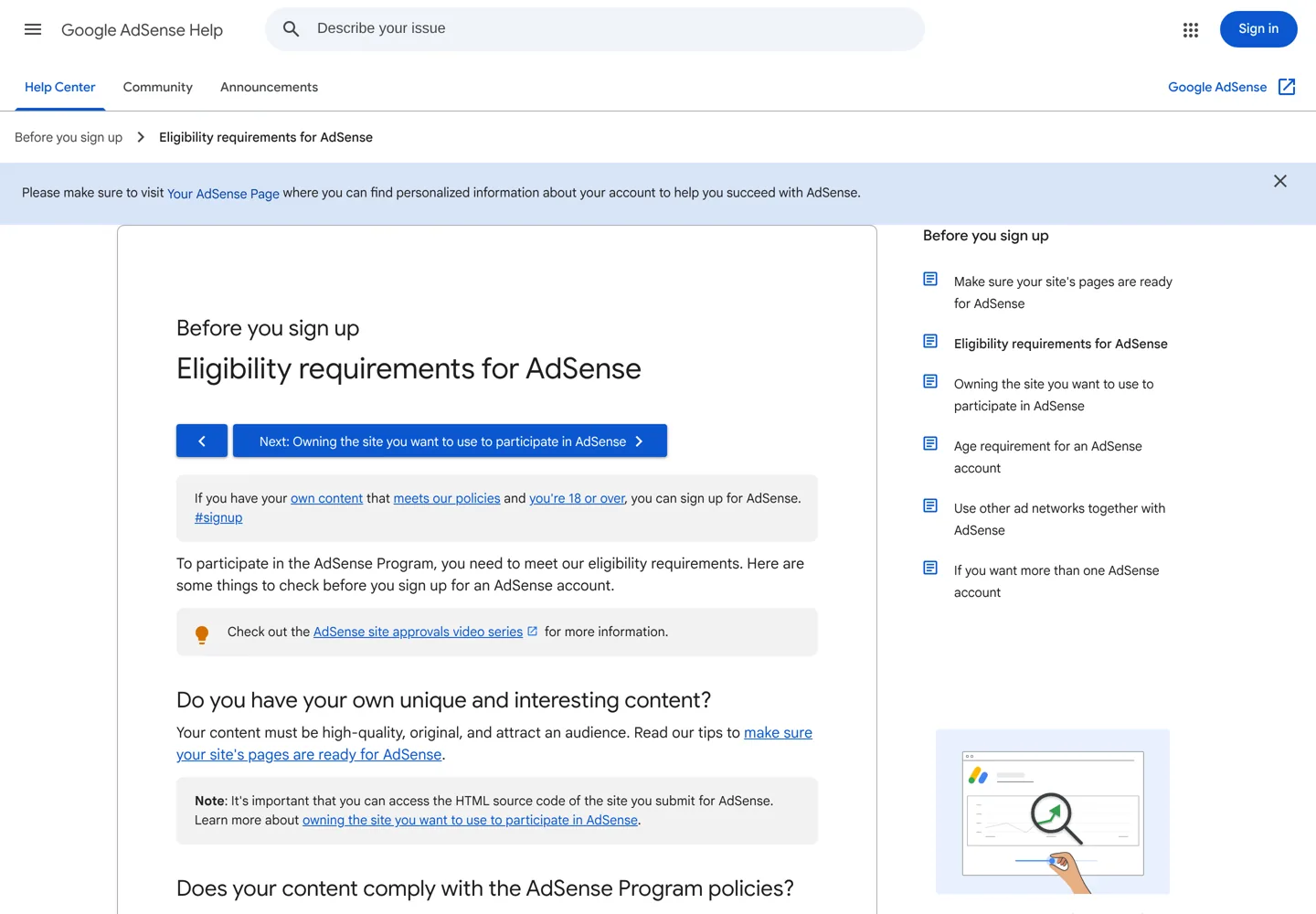
- Google AdSense has no traffic minimum. You need original content that follows its policies and to be 18 or over. Google says publishers receive 80% of the revenue for display ads on content.
- Journey by Mediavine accepts sites with at least 1,000 sessions in 30 days from Tier 1 countries such as the US, UK, Canada and Australia. The full Mediavine programme asks for $5,000 a year in ad revenue.
- Raptive recently lowered its minimum to 25,000 monthly pageviews.
- Ezoic now requires 250,000 monthly active users for new sites.
Start with AdSense, then move to a premium network as your traffic grows. The guides to Ezoic vs AdSense and Ezoic vs Mediavine cover each step of that ladder.
2. Affiliate marketing
With affiliate marketing you recommend a product with a special tracking link, and the company pays you a commission when a reader buys. It suits reviews, comparisons and “best of” posts, where readers are already deciding what to buy.
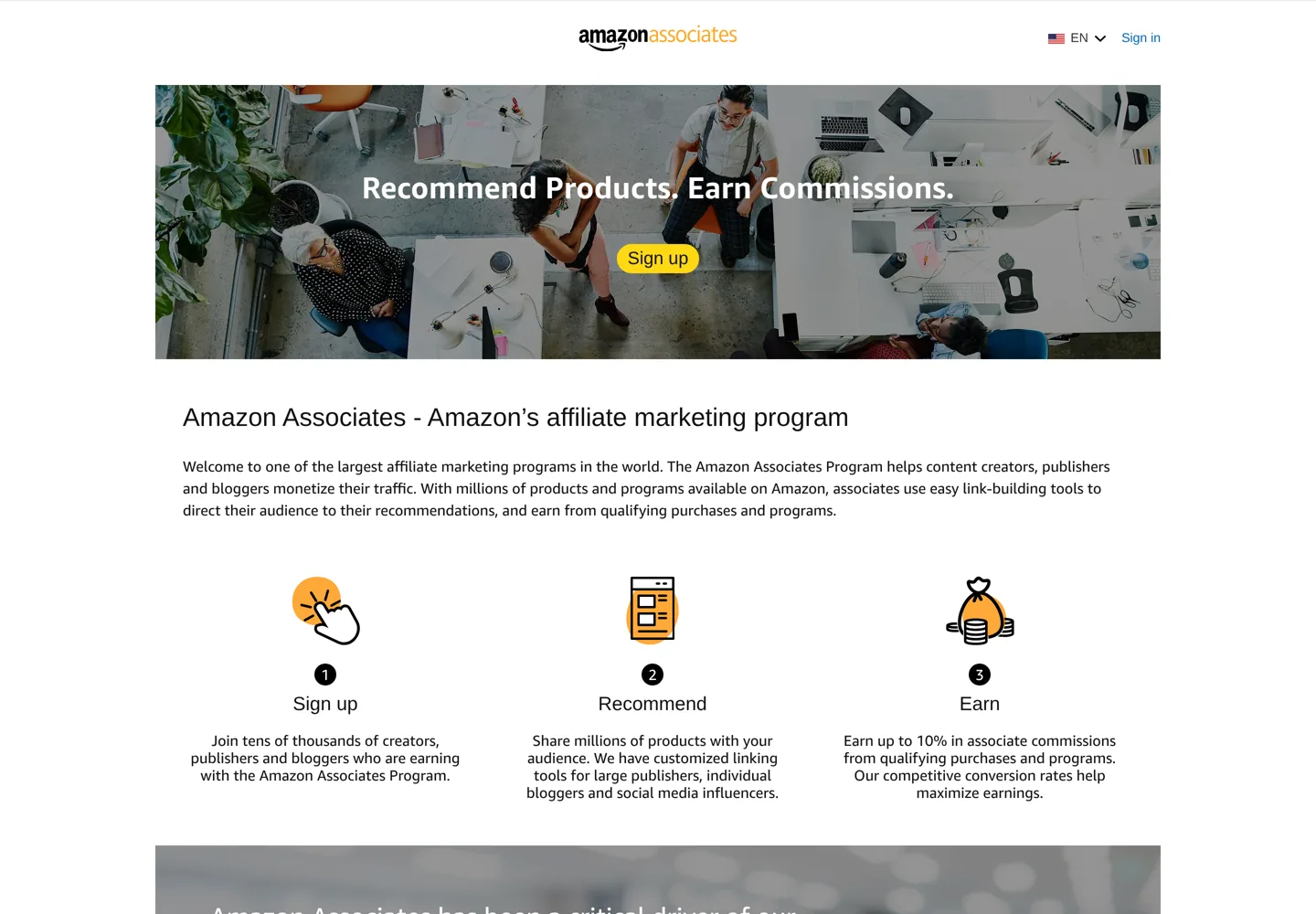
Amazon Associates is the easiest programme to join and covers almost any product. Amazon advertises commissions of up to 10%, and its US rate table shows how much they vary by category: for example 10% on luxury beauty, 4.5% on physical books and kitchen, 3% on toys, furniture and home, 1% on grocery and health, and 4% for all other categories. You must show Amazon’s disclosure, “As an Amazon Associate I earn from qualifying purchases.”
Beyond Amazon, affiliate networks connect you to thousands of brands in one account: CJ, Awin (which says it connects more than 30,000 brands with over a million partners, and now also runs ShareASale’s services), Impact, and ClickBank for digital products. Many software and hosting companies also run their own affiliate programmes, which you join on their websites.
Three rules keep affiliate income healthy:
- Recommend what you’d recommend anyway. Readers come back to a blog whose advice works, and leave one that sells everything.
- Disclose it. Tell readers you may earn a commission, near the links, in plain words.
- Mark the links. Google asks that paid and affiliate links carry
rel="sponsored"(ornofollow).
If many of your readers are abroad or on phones, a link tool helps you earn from them too; see what geni.us is and how it works.
3. Sponsored posts
Once your blog has a steady audience in a clear topic, brands may pay you to review their product or write about it. You set a price per post, per newsletter mention or per social share.
Do it carefully. Say clearly that the post is sponsored, and mark every link in it with rel="sponsored": Google’s spam policies treat buying or selling links that pass ranking credit as link spam, which can hurt your whole site. Only accept products you’d be happy to recommend to a friend, and keep sponsored posts a small part of what you publish.
4. Digital products
Selling your own product pays the most per sale, because there’s no middleman taking a commission. Good first products answer a question readers keep asking:
- Ebooks and guides that go deeper than a blog post.
- Templates, checklists and spreadsheets that save readers time.
- Online courses once you can teach a skill step by step.
You can sell from your own site, or through platforms such as Gumroad, Payhip or Lemon Squeezy for downloads, and Teachable or Thinkific for courses. Each charges differently, so compare their fees for the price you plan to charge.
5. Services
A blog is a public portfolio. If you write about SEO, design, writing or marketing, your posts prove you can do the work, and some readers will ask you to do it for them. Freelance writing, consulting calls, website setup and SEO audits can earn from your first months, long before ads or affiliate links pay well. Add a clear “Work with me” page and say what you offer and what it costs.
6. An email newsletter
Search traffic and social reach can change overnight; an email list is an audience you own. Collect emails from your first posts with a simple sign-up form and a reason to join (a checklist, a weekly tip).
A newsletter earns in three ways: sending readers to your affiliate reviews and products, selling sponsor slots once the list is large, or charging for a paid edition. Tools such as Kit, MailerLite, beehiiv and Substack handle sign-ups and sending; check each one’s plans for paid subscriptions and sponsor tools before you choose.
7. Memberships and paid communities
When readers want more of you, a membership gives them extras for a monthly fee: members-only posts, templates, a private community, live Q&A sessions or early access. It turns one-off visitors into steady monthly income, but it needs a loyal audience and a promise you can keep every month, so it usually comes later.
8. Selling the blog
A blog with steady, provable income is an asset you can sell. Buyers look at how much it earns, where its traffic comes from, how much work it takes to run and whether the income is likely to last. Keep clean records of traffic and earnings from the start, and the blog will be worth more when you sell.
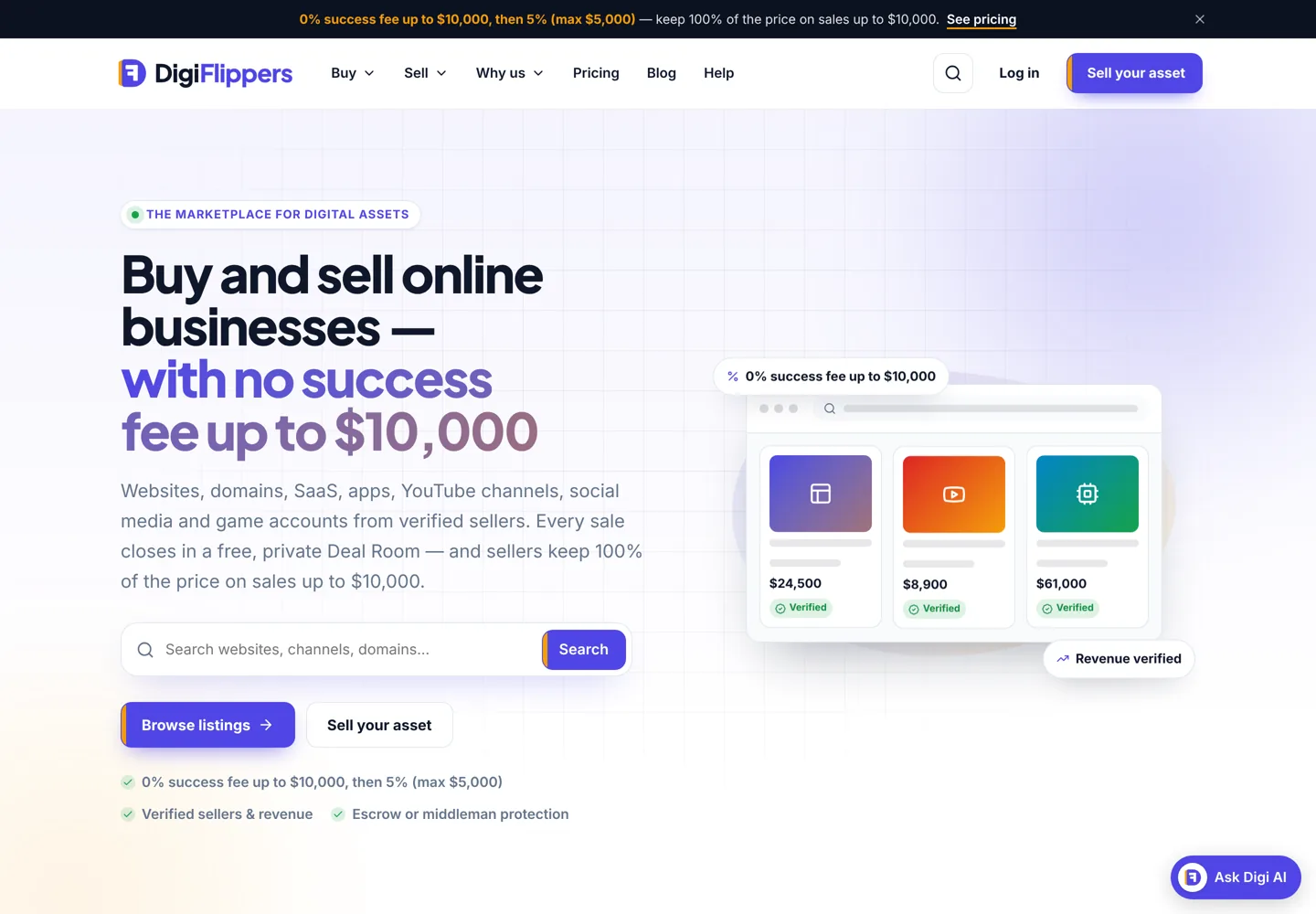
Marketplaces include Flippa and Empire Flippers, and DigiFlippers, which I founded. DigiFlippers charges no success fee on sales up to $10,000, then 5% (capped at $5,000). The guides to making money from flipping blogs and buying a blog cover both sides of the deal.
Which ways to earn fit your blog right now

- Brand-new blog: write helpful posts, add affiliate links where they genuinely help, apply for AdSense, and start an email list.
- A few thousand visitors a month: improve the posts that already earn, offer a service, and try Journey by Mediavine if most of your readers are in Tier 1 countries.
- Steady traffic and trust: launch a small digital product, accept selected sponsors, and move to a premium ad network.
- A mature blog: add a membership or courses, or sell the blog and start the next one.
What not to do
- Don’t fill pages with ads before you have readers; slow, cluttered pages lose the traffic that would have paid you.
- Don’t sell links that pass ranking credit, or buy them; Google treats both as link spam.
- Don’t hide affiliate links or sponsorships. Amazon requires its disclosure, and readers stop trusting a blog that hides them.
- Don’t rely on one method or one traffic source. Spread your income across two or three of the ways above.
- Don’t believe income promises. No one can tell you what your blog will earn; it depends on your topic, your traffic and your work.
Grow the traffic that pays
Every method above earns more with more of the right readers. Pick topics people search for with the best keyword research tools, set your site up for search with the WordPress SEO tutorial, and track what’s working with free tools to check your blog traffic. If you haven’t launched yet, start with how to start a blog.
Questions people ask
Can you really earn money from a blog?
Yes, through ads, affiliate links, sponsorships, your own products and services, newsletters, memberships or selling the blog. How much depends on your topic, your traffic and your work; nobody can promise a figure.
How do beginner bloggers make money?
Usually with affiliate links in helpful posts and Google AdSense, which has no traffic minimum. Offering a service related to your topic can pay sooner than either.
How many visitors do I need to make money blogging?
None for AdSense or affiliate links, though earnings grow with traffic. Journey by Mediavine needs 1,000 sessions in 30 days from Tier 1 countries, Raptive 25,000 monthly pageviews, and Ezoic 250,000 monthly users for new sites.
How much does Amazon pay bloggers?
Amazon Associates commissions vary by category on Amazon.com: for example 10% on luxury beauty, 4.5% on books and kitchen, 3% on toys and home, and 4% on all other categories.
Do I need to disclose affiliate links?
Yes. Amazon requires the statement "As an Amazon Associate I earn from qualifying purchases," readers expect honesty, and Google asks that affiliate and paid links be marked rel="sponsored".
Can I sell my blog later?
Yes. Blogs with steady, provable income sell on marketplaces such as Flippa, Empire Flippers and DigiFlippers. Keep clear records of traffic and earnings to get a better price.
Sources
- Eligibility requirements for AdSense (AdSense Help) support.google.com · checked October 11, 2026
- AdSense revenue share (AdSense Help) support.google.com · checked October 11, 2026
- Mediavine and Journey requirements www.mediavine.com · checked October 11, 2026
- Getting started: Ezoic's requirements (Ezoic Support) support.ezoic.com · checked October 11, 2026
- Amazon Associates affiliate-program.amazon.com · checked October 11, 2026
- Associates Program Standard Commission Income Rates (Amazon) affiliate-program.amazon.com · checked October 11, 2026
- Associates Program Operating Agreement (Amazon) affiliate-program.amazon.com · checked October 11, 2026
- Qualify your outbound links to Google (Google Search Central) developers.google.com · checked October 11, 2026
- Spam policies for Google web search developers.google.com · checked October 11, 2026
- Awin www.awin.com · checked October 11, 2026
- DigiFlippers digiflippers.com · checked October 11, 2026

Building websites since 2006: 500+ web projects of every size and $300K+ in website deals sold or brokered. Founder of A Digital Motive and DigiFlippers. I share the whole process here, plainly.
Founder of A Digital Motive and DigiFlippers