- Like exchanges trade engagement instead of earning it.
- X's rules list coordinated engagement exchanges as spam.
- YouTube and LinkedIn ban the same thing on their platforms.
- Exchanged likes send the wrong signals and bring no readers.
- Grow with useful posts, replies and threads; use ads if needed.
A Twitter like exchange is a site or group where you like other people’s posts on X in return for likes on yours. It looks like free growth, but X‘s rules prohibit it: X’s Authenticity policy lists coordinating to exchange engagement, such as likes, reposts, replies or follows, as engagement spam, and also bans using or promoting third-party services that do it for you. Exchanged likes also come from people with no interest in your topic, so they don’t bring readers. This guide explains the rules and the approaches that do grow an audience on X, checked on 12 October 2026.
Posting threads? Our comparison of Twitter thread schedulers covers the tools. This page is about likes and engagement.

How a Twitter like exchange works
Like exchanges usually run on points or credits. You earn points by liking, following or reposting other members’ content, then spend them to have members do the same for your posts. Some are websites, others are browser extensions, chat groups or “engagement pods” where members agree to like everything posted in the group. The likes are real clicks from real accounts, but they’re given in exchange, not because anyone found your post useful. Many members click through dozens of posts a minute to earn points, without reading them, which is why the engagement rarely turns into replies, follows or visits to your site.
What X’s rules say
X’s Authenticity policy (April 2025 version on its Help Center) describes engagement spam as the inauthentic use of X’s engagement features to artificially affect traffic or disrupt people’s experience. Under that heading, it doesn’t allow:
- Coordinating to exchange engagement in any X feature, such as likes, polls, replies, reposts, lists, views or follows.
- Coordinating with or paying others to inflate an account’s numbers, such as followers or engagement.
- “Follow churn” (following and then unfollowing many accounts) and indiscriminate following.
- Engaging with posts aggressively or through automation to drive traffic or attention.
- Using or promoting third-party services that perform any of these exchanges.
The same policy lists what X can do about it: anti-spam challenges, restricting reach (for example removing posts from search or trends, or downranking them), temporarily limiting features, and suspending accounts, permanently on first detection for severe violations. It also says you’re ultimately responsible for third-party apps you allow to access or use your account, so an exchange app acting for you counts as you.
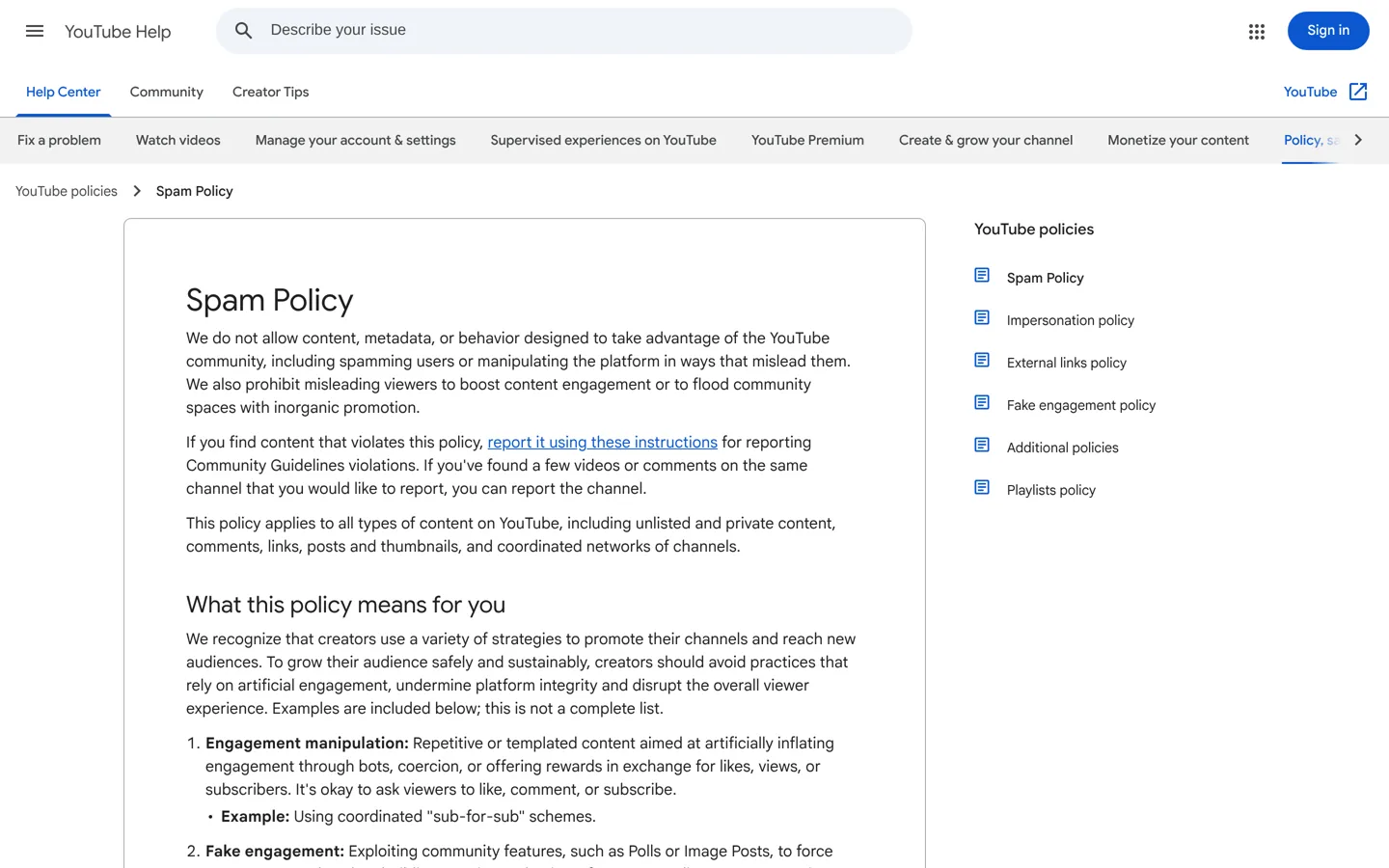
Other platforms take the same line. YouTube’s spam policy, for example, bans offering rewards in exchange for likes, views or subscribers, gives coordinated “sub-for-sub” schemes as an example, and says it’s fine to ask viewers to like, comment or subscribe. LinkedIn’s policies say not to agree with others ahead of time to like or reshare each other’s content.
The real cost of exchanged likes
- Account risk: breaking platform rules can lead to reduced reach or action against your account.
- Wrong signals: likes from people outside your topic tell X that your posts appeal to them, which can show your posts to the wrong audience.
- No readers: exchanged likes rarely become followers who read, click or buy.
- Wasted time: the hours spent earning points could go into posts that bring real readers.
- Trust: followers notice when a post has hundreds of likes but no real conversation.
What actually grows engagement on X

- Pick a clear topic. People follow accounts that are reliably useful about one thing.
- Post things worth liking: a practical tip, a short lesson from your own work, a useful link with a sentence on why it matters.
- Write threads for bigger ideas, with a strong first post and one point per post.
- Reply thoughtfully to people in your field. Good replies to larger accounts are one of the most reliable ways to be discovered.
- Post consistently at times your audience is around; a scheduler helps.
- Join conversations, not just broadcasts: ask questions, answer them, and credit others.
- Link to your best content when it genuinely helps, so engagement on X turns into readers on your site.
Is it ever fine to ask for likes?
Asking your own audience to like, repost or share something you’ve made is normal; the problem is exchanging engagement or paying for it. “If this was useful, a repost helps others find it” is fine. “Like my post and I’ll like yours” is an exchange. The difference is whether people engage because they value the post, or because they’re getting something back.
Paid promotion: the honest alternative
If you want more reach quickly, X offers paid advertising through its own ads tools; check X’s business pages for the current options and costs. Unlike exchanged likes, advertising through the platform itself is a permitted way to reach more people, typically chosen by interests or audience. It works best when you promote a post that’s already performing well without ads, and when you send people to something useful, such as a free guide or a newsletter sign-up. Set a small budget first and judge it by sign-ups or sales, not by likes.
Free likes vs paid promotion: a comparison
- Like exchanges: cost nothing in money, but cost hours of clicking, break X’s rules, and deliver likes from people who don’t care about your topic.
- Bought likes or followers: cost money, break the rules in the same way, and leave you with numbers that don’t match your real audience.
- Organic growth: costs time spent writing and replying, follows the rules, and builds an audience that reads, replies and clicks.
- Paid advertising on X: costs money, follows the rules, and reaches people you choose by interest; best for promoting something that already works.
The honest choice is between your time (organic growth) and your money (ads). Exchanges and bought engagement cost one or the other and give you nothing you can build on.
Writing posts people want to like
People like posts that make them think “that’s useful” or “that’s so true”. A few patterns that tend to earn genuine engagement:
- A specific tip with a result: “I cut my page load time in half by resizing images before upload. Here’s the setting I use.”
- A short lesson from experience: what you tried, what happened, what you’d do differently.
- A clear opinion, kindly argued, that people in your field will want to discuss.
- A useful resource with one sentence on why it’s worth someone’s time.
- A question you genuinely want answered, followed by thoughtful replies to the answers.
Read your post before publishing and ask: would I stop scrolling for this if someone else had written it? If not, make it more specific, add a real example, or cut it until only the useful part is left.
Why likes matter less than you think
A like takes a second and costs nothing, so it says little about whether someone will read your blog, join your newsletter or buy what you recommend. For a blogger or small business, the goal of being on X is usually to bring people to something you own: your site, your list or your offer. Measure your progress by those outcomes. A handful of loyal readers who reply and click are worth far more than a large number of likes from strangers.
Measuring real engagement
Likes are the least useful number. Watch the ones that show genuine interest:
- Replies and quote posts that discuss what you said.
- Bookmarks and reposts, which suggest people found the post worth keeping or sharing.
- Profile visits and new followers after a post.
- Link clicks to your site, and what those visitors do next in your analytics.
A post with 20 likes and 5 thoughtful replies from people in your field is usually worth more than one with 500 exchanged likes.
Cleaning up after using like exchanges
If you’ve used an exchange in the past, stop, disconnect any apps or extensions that act on your account, and change your password if you gave a service your login. Remove third-party app access you no longer use from your account’s settings, and turn on two-factor authentication. Then focus on posting useful content consistently; genuine engagement takes time to build, but it lasts.
Don’t try to remove every old exchanged like or follower by hand. Concentrate on what you post from now on: as genuine followers arrive and engage, they gradually outweigh the old numbers, and the signals X sees start to reflect your real audience. If your follower count drops a little as inactive accounts disappear, that’s a healthier account, not a setback.
A 30-day plan for genuine engagement
- Week 1: define your topic, update your bio and pin your most useful post or thread.
- Week 2: post one useful tip a day and reply to five people in your field each day.
- Week 3: publish one thread on a problem your readers have, linking to a full post on your site.
- Week 4: look at which posts got replies and bookmarks, and do more of that kind.
Common mistakes
- Chasing likes instead of replies, followers and clicks.
- Joining engagement pods, which the platforms treat as coordinated manipulation.
- Follow-unfollow tactics to inflate follower counts.
- Giving your password to growth services.
- Posting only links to your own content without adding anything on X itself.
The same principles apply on every network. Our guide to social media etiquette covers them, and our social proof guide explains why genuine engagement matters for trust.
Questions people ask
Are Twitter like exchanges allowed?
No. X's Authenticity policy, as shown in its Help Center, lists coordinating to exchange engagement such as likes, reposts, replies and follows as engagement spam.
What is an engagement pod?
A group whose members agree to like or comment on each other's posts. Platforms treat this as coordinated, inauthentic engagement; LinkedIn's policies specifically say not to agree in advance to like or reshare each other's content.
Can I ask my followers to like or repost?
Yes. Asking your own audience to share something useful is normal. The problem is exchanging or paying for engagement.
Is paid promotion on X allowed?
Yes, advertising through X's own ads tools is a permitted way to reach more people. Judge it by sign-ups or sales, not likes.
What should I do if I've used a like exchange?
Stop, disconnect any apps that act on your account, change your password if you shared it, review connected apps and turn on two-factor authentication.
How do I get more likes on X honestly?
Post useful tips and lessons on one clear topic, write threads, reply thoughtfully to people in your field and post consistently.
Sources
- Authenticity (X Help Center) help.x.com · checked October 12, 2026
- Spam policy (YouTube Help) support.google.com · checked October 12, 2026
- Professional Community Policies (LinkedIn) www.linkedin.com · checked October 12, 2026

Building websites since 2006: 500+ web projects of every size and $300K+ in website deals sold or brokered. Founder of A Digital Motive and DigiFlippers. I share the whole process here, plainly.
Founder of A Digital Motive and DigiFlippers