- Autocomplete isn't a popularity ranking; Google says it weighs language, location, trends and history.
- Trends scores are relative (0–100), not search counts.
- Keyword Planner gives estimates and needs a Google Ads account with billing details.
- Search Console shows real queries for your pages, with impressions and position.
- Read the top results to understand what each search wants.
Here’s how to search for keywords on Google with Google’s own tools: type your topic into Google and note the autocomplete predictions, the “People also ask” questions and the related searches; compare topics and seasons in Google Trends; check estimated monthly searches in Google Keyword Planner; and, once your site has traffic, find the queries you already appear for in Search Console. This guide shows how to use each one, and what Google’s own help pages say each tool can and can’t tell you, checked on 12 October 2026.
Want the full process, from ideas to a content plan? Our keyword research guide covers it, and our comparison of the best keyword research tools looks at paid options. This page is about Google’s own features, most of them free.

How to search for keywords on Google: 6 free sources
1. Autocomplete: what people start to type
Start typing your topic into Google and stop before you finish: the predictions that appear are search ideas. Google’s help page explains that its systems look for common queries that match what you’ve started to type, but also consider the language of the query, the location it comes from, trending interest and your past searches. It adds that autocomplete “doesn’t simply display the most common queries on a given topic”, which is why it differs from Google Trends.
Use it for ideas, not for volumes:
- Type your topic followed by a space, then each letter of the alphabet (“wordpress backup a”, “wordpress backup b”) to see more predictions.
- Add question words before it: “how”, “why”, “can”, “best”, “vs”.
- Search in a private window, signed out, so your own history affects the results less.
2. “People also ask”: the questions behind the topic
For many searches, Google shows a box of related questions. Each one is a question people ask about your topic, and opening one often reveals more. Note the questions that fit a page you could write, and use the best ones as headings or as your FAQ. They’re especially useful for spotting what beginners don’t understand.
3. Related searches at the bottom of the page
Scroll to the end of the results for more searches related to yours. They often show other wordings of the same need (“cheap”, “free”, “for beginners”) and neighbouring topics. Click one and repeat to explore further.
4. Look at the results themselves
The results tell you what Google thinks the searcher wants. Are the top pages guides, product pages, videos or forum threads? Are they lists, comparisons or step-by-step tutorials? If every result is a video, a written guide may struggle; if they’re all comparison pages, a single review won’t match. Our SEO basics guide explains how Google decides what to show.

5. Google Trends: compare interest over time
Google Trends shows how interest in a search changes over time and by place. Google’s help page explains how to read it:
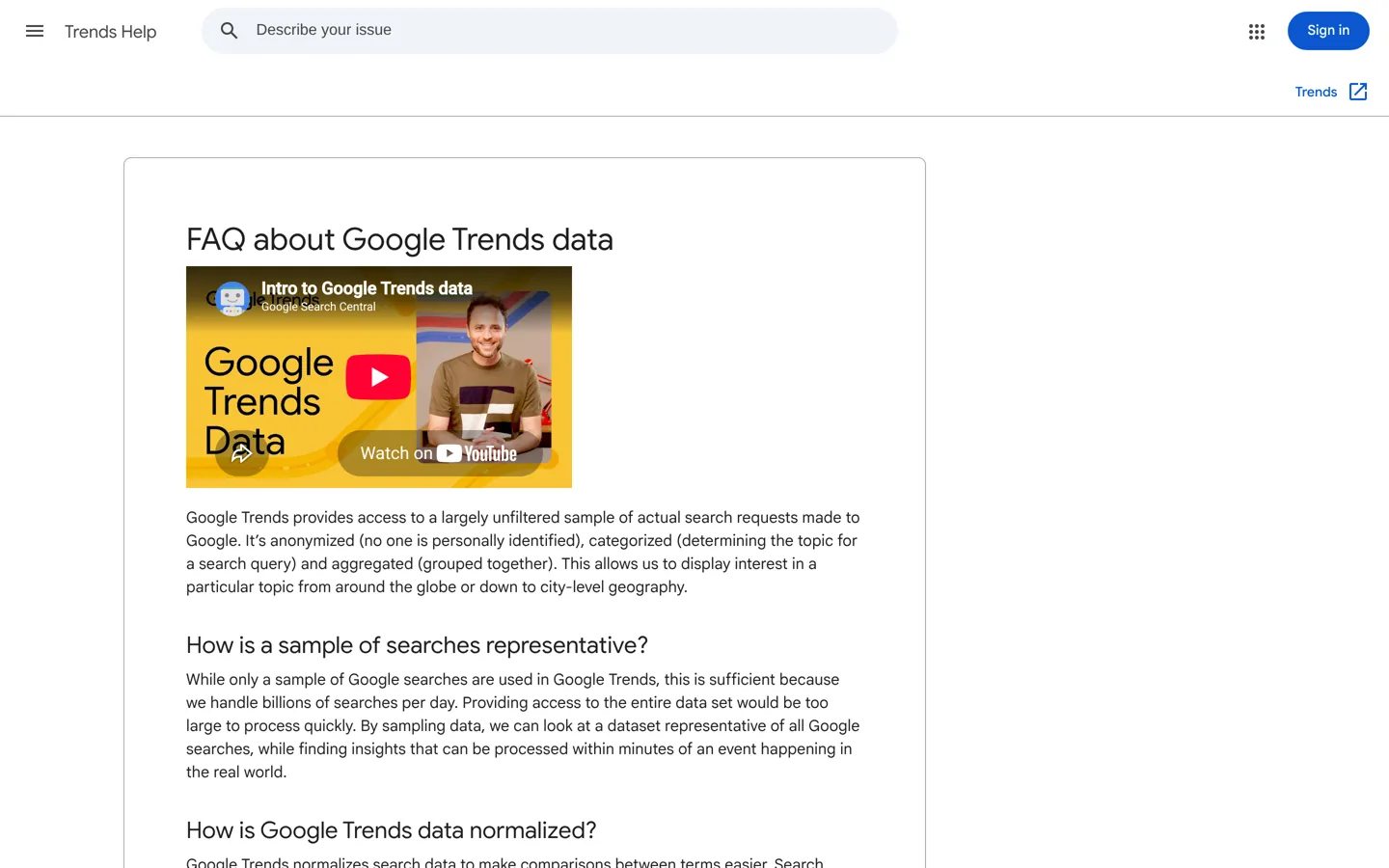
- It uses a sample of real Google searches, which Google says is enough because it handles billions of searches a day.
- Each data point is divided by the total searches for its place and time, then scaled from 0 to 100. So the numbers show relative popularity, not search counts, and two regions with the same score don’t always have the same number of searches.
- Searches made by very few people appear as 0, and Google adds a little random noise for privacy, which is most noticeable on low-interest searches, so one-off spikes on small terms shouldn’t be read as real.
Use Trends to compare two wordings (“blog” vs “website”), spot seasonal topics so you publish before the peak, and check whether a topic is growing or fading. Google suggests comparing a term with common searches to understand its scale.
6. Google Keyword Planner: estimated monthly searches
Google Keyword Planner is a tool inside Google Ads. Google says it helps you discover new keywords and view estimates of the searches they receive and the cost to target them with ads. Two things to know:
- It’s built for advertisers, so it lives in a Google Ads account. Google’s help page says you must complete account setup by entering billing information to access basic features such as “Get ideas for new keywords”.
- Its numbers are estimates for planning ads, and the cost figures show what advertisers pay, which is a useful sign of how commercial a keyword is.
Use “Discover new keywords” with your topic or a competitor’s page, then sort the ideas by relevance rather than volume.
Bonus: Search Console shows the searches you already get
Once your site has some traffic, Google Search Console is the most valuable free source, because it shows real searches for your own pages. Google’s help page explains that the Performance report shows the queries most likely to show your site, with clicks, impressions, click-through rate and average position, for the past three months by default.
- Open Performance → Search results.
- Turn on Average position and sort the Queries table by impressions.
- Look for queries with many impressions but a position around 8 to 20: you’re nearly there, and a better page or section could move you up.
- Open a query, then the Pages tab, to see which page Google shows for it.
Google notes you might not see your site when you search the same query yourself, because results depend on time, place, device and recent history.
Check what your own site already covers
Before writing a new page, search site:yourdomain.com plus the topic. Google documents the site: operator as a way to show results only from a particular domain or URL prefix. If an existing page already covers the topic, improve that page instead of creating a second one that competes with it.
A worked example
Here’s how the sources combine, using “wordpress backup” as an illustration (results change with time and place, so yours will differ). Typing it into Google and stopping before the end shows predictions such as plugin names and “how to” wordings. The “People also ask” box adds questions like how often to back up or whether a host’s backups are enough. Related searches add wordings such as “free” and “automatic”. The top results are mostly step-by-step guides and plugin comparisons, so the searcher wants instructions and choices, not news.
From that, you might plan two pages instead of ten: a how-to guide that answers the “how” and “how often” questions, and a comparison of backup plugins for the “best” and “free” wordings. Trends then shows whether interest is steady or seasonal, and Search Console, months later, shows which wordings each page actually appears for, so you can add a section where a question keeps coming up.
Local and seasonal keywords
If your topic depends on place or time, Google’s tools help in two ways. Trends lets you compare interest by region and over months or years, so you can see where a topic is searched most and when it peaks; remember that its numbers are relative within each place. Autocomplete, Google says, considers the location a query comes from and trending interest, so predictions can differ by country and season. For a seasonal topic, publish or update the page a few weeks before the usual peak, so it’s ready when interest rises.
A 20-minute routine
- Write your topic in one or two words.
- Collect autocomplete predictions with the alphabet and question-word tricks.
- Add “People also ask” questions and related searches.
- Look at the top results to read the intent behind each idea.
- Compare the strongest two or three wordings in Google Trends.
- Check estimated volumes in Keyword Planner if you have access.
- Group ideas that share one intent into one page, and note the rest for other pages.
Keep a simple keyword sheet
Put everything in one spreadsheet with five columns: the keyword or question, where you found it (autocomplete, People also ask, Trends, Search Console), what the top results are (guide, list, video, shop), the page that will answer it, and its status. Grouping rows by the page column shows at a glance which ideas belong together and which need a page of their own. Revisit the sheet every few months with fresh Search Console data, and add the new questions your pages start to appear for.
What Google’s free tools can’t tell you
- Exact search numbers. Trends is relative; Keyword Planner gives estimates.
- How hard a keyword is to rank for. Look at the results and judge whether your page could be better than what’s there.
- Your competitors’ traffic. Paid tools estimate it; Google doesn’t share it.
That’s where paid tools help, but for a new blog, Google’s own features are enough to choose your first pages well.
Mistakes to avoid
- Treating autocomplete as a popularity ranking. Google says it isn’t one.
- Reading Trends scores as search counts. They’re relative, from 0 to 100.
- Chasing volume over intent. A smaller search that matches your page beats a big one that doesn’t.
- Writing a new page for every wording. One page can answer several close variants.
Questions people ask
How do I search for keywords on Google for free?
Use autocomplete, the People also ask box and related searches on the results page, Google Trends to compare interest, and Search Console for the queries your site already appears for. Keyword Planner needs a Google Ads account.
Does Google autocomplete show the most popular searches?
Not exactly. Google says autocomplete doesn't simply display the most common queries; it also considers language, location, trending interest and your past searches.
Does Google Trends show search volume?
No. Trends divides each data point by total searches for its time and place and scales it from 0 to 100, so it shows relative interest, not counts.
Is Google Keyword Planner free?
It's part of Google Ads. Google's help page says you must complete account setup with billing information to access features such as 'Get ideas for new keywords'.
How do I see which keywords my site ranks for?
In Google Search Console, open Performance → Search results and look at the Queries table, with clicks, impressions, CTR and average position.
Why don't I see my site when I search my keyword?
Google says results depend on the time, place, device and recent history of the person searching, so your own search may differ from what others see.
Sources
- How Google autocomplete works (Google Search Help) support.google.com · checked October 12, 2026
- FAQ about Google Trends data support.google.com · checked October 12, 2026
- Use Keyword Planner (Google Ads Help) support.google.com · checked October 12, 2026
- Performance report (Search Console Help) support.google.com · checked October 12, 2026
- site: search operator (Google) developers.google.com · checked October 12, 2026

Building websites since 2006: 500+ web projects of every size and $300K+ in website deals sold or brokered. Founder of A Digital Motive and DigiFlippers. I share the whole process here, plainly.
Founder of A Digital Motive and DigiFlippers