
- Thought leadership is trust built by sharing useful ideas for years.
- Google encourages clear bylines and author information.
- Share first-hand experience and original analysis, not adverts.
- Publish good work on a steady rhythm you can keep.
- Shy people can lead through writing; video is optional.
A thought leader is someone people in their field trust to explain what’s happening, what works and what to do next. For a blogger or small business owner, becoming one isn’t about a big following or a clever slogan. It’s about consistently sharing real experience and useful ideas, under your own name, until people recognise you as a reliable source. Google’s own guidance on helpful content rewards the same things: clear authorship, first-hand experience and trust. This guide sets out six steps to build that reputation, including for people who are shy or camera-shy, checked on 12 October 2026.
Building trust on your site itself? Our guide to social proof covers reviews and testimonials. This page is about your personal reputation.

What a thought leader really is
The phrase is used so often it can sound empty. Strip it back and a thought leader does three things: they understand their field deeply, including its audience and competitors; they share that understanding generously to educate others, not just to sell; and they do it consistently, over years. Popularity can follow, but it isn’t the definition. Someone with a small, loyal audience who relies on their advice is more of a thought leader than someone with a big following and nothing original to say.
Why it matters for bloggers
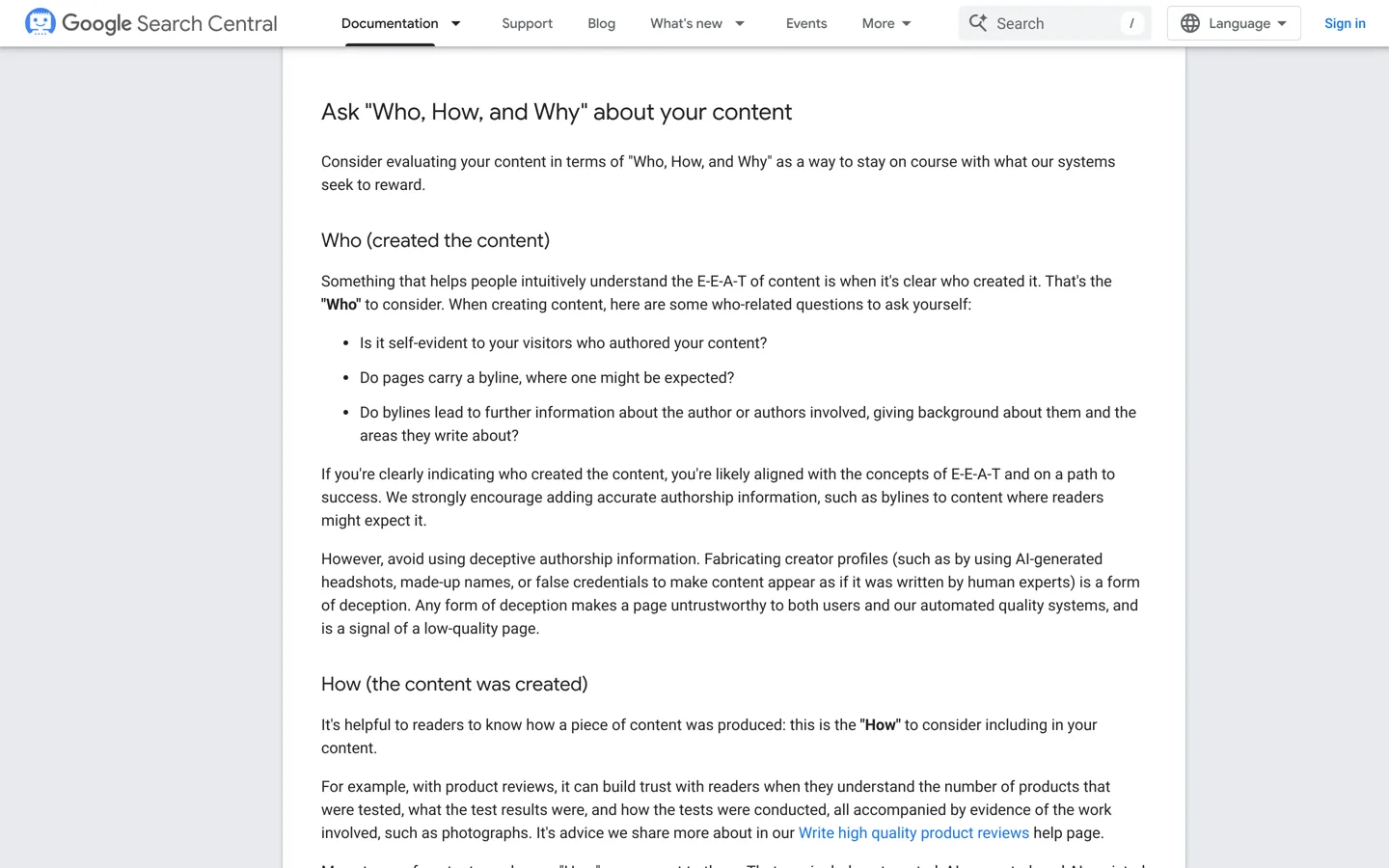
Readers increasingly want to know who’s behind the advice they follow, and so does Google. Its guide to creating helpful, reliable, people-first content suggests asking “Who, How, and Why” about your content. On the “who”, it asks whether it’s self-evident who wrote the content, whether pages carry a byline where readers would expect one, and whether those bylines lead to more information about the author and the topics they write about. It says it strongly encourages accurate authorship information, and that fabricated creator profiles, such as AI-generated headshots, made-up names or false credentials, are a form of deception that makes a page untrustworthy.
Google describes the qualities it looks for as experience, expertise, authoritativeness and trustworthiness (E-E-A-T), and says that of these, trust is the most important. A real person with real experience, writing under their own name, is the most direct way to show it.

Step 1: Choose a clear area of expertise
You can’t lead thinking on everything. Pick a field narrow enough that you can know it better than most people writing about it, and broad enough to keep you interested for years. “Marketing” is too broad; “email marketing for small online shops” is something you can own. Write down the three or four topics you’ll be known for, and say no to most things outside them.
Step 2: Start writing, and keep writing
Writing is one of the most effective and scalable ways to build a reputation, because each article keeps working long after you publish it. Start on your own site, where you control the address and the archive. Then add places where your audience already reads, such as LinkedIn, a newsletter, or guest articles for respected sites in your field. Our guide to article writing skills helps you write more clearly.
Step 3: Share experience, not promotion
People follow thought leaders for ideas, not adverts. If most of what you publish is about your products, readers will tune out. Write about what you’ve tried, what happened, what you’d do differently, and what you think is coming next in your field. Google’s guide asks whether content shows first-hand expertise, for example from actually using a product or service, and whether it provides original information, research or analysis beyond the obvious. Those are exactly the things that make a voice worth following.
Step 4: Publish high-quality work consistently
Quality and consistency work together. One brilliant article a year won’t build a reputation, and weekly filler will damage one. Choose a rhythm you can keep with good work, such as one strong article a fortnight and a few short posts a week, and stick to it with an editorial calendar. Trust is built over time; real thought leaders are in it for the long term, not chasing the latest trend for a quick win.
Step 5: Make your identity clear and complete
- An about page that explains who you are, what you’ve done and why you write about this topic.
- An author bio and byline on every article, linking to that page.
- Complete profiles on the networks you use, with a real photo, a clear headline and a link to your site.
- Consistent names across platforms, so people can find you. Our guide to username checkers helps.
- Honest credentials: never claim qualifications or results you don’t have.
If you use structured data on your site, Google’s article guidelines recommend including every author in the markup and linking each author to a page with more information about them, such as an about or profile page.
Step 6: Join the conversation
Thought leadership isn’t a broadcast. Reply to comments, answer questions in groups and forums, credit other people’s good ideas, and disagree respectfully when you think something’s wrong. Speak on podcasts or at small events when you’re ready, and collaborate with others in your field. Each conversation shows people how you think, which is what they’re really following. Our guide to social media etiquette covers doing this well.
Content that builds a thought leader’s reputation
- Your own data: results from your own site, projects or tests, such as what happened when you changed your email schedule. Nobody else can publish it.
- Detailed case studies, with permission, showing the problem, what you did and the result.
- Clear opinions, argued with evidence, on questions your field is debating.
- Explainers that make a complicated change, such as a new rule or tool, easy to understand quickly.
- Lessons from mistakes: what didn’t work and why. These are often the most trusted posts of all.
Whatever the format, cite your sources, date your facts and update important articles when things change. Accuracy over time is what turns readers into people who recommend you.
Personal brand or business brand?
If you run a business, you can build reputation for the company, for yourself, or both. A personal brand travels with you and is often easier to trust, because people relate to people. A business brand can grow beyond one person and be sold one day. Many small businesses do both: the founder writes and speaks under their own name, with clear links to the business. If others write for your business, give each of them a real byline and bio, so readers know who’s speaking.
Thought leadership for shy people
You don’t need to be outgoing to become a trusted voice. Many respected experts are introverts who prefer writing to talking. If you’re shy:
- Start with writing, where you can take your time and edit before anyone sees it.
- Use small, low-pressure steps: a comment on someone else’s post, then a short post of your own, then a longer article.
- Prepare before live moments: write notes for a podcast or video, and practise with a friend.
- Focus on helping one reader, not impressing everyone. It takes the pressure off.
- Choose your formats: video and speaking are optional; a strong blog and newsletter are enough.
Shyness is common, and it usually eases with practice. But if fear of social situations is long-lasting, overwhelming and affects your daily life, work or relationships, the NHS explains that this may be social anxiety, which is more than shyness, and that treatments can help. It suggests seeing a GP, and in England you can also refer yourself directly to an NHS talking therapies service.
A 90-day start plan
- Weeks 1 and 2: choose your field, write your about page and author bio, and complete your profiles.
- Weeks 3 to 6: publish one in-depth article a fortnight and a short post on one network twice a week.
- Weeks 7 to 10: reply to five people in your field each week, and pitch one guest article.
- Weeks 11 and 12: review what readers responded to, and plan the next quarter around it.
How to measure your progress
- People quote, link to or recommend your articles.
- You’re invited to write guest posts, speak on podcasts or comment on news in your field.
- Readers reply with thoughtful questions, not just likes.
- Searches for your name grow over time.
- Enquiries mention your writing as the reason they got in touch.
Common mistakes
- Calling yourself a thought leader; let others decide that.
- Promoting instead of teaching.
- Chasing every trend instead of going deep on your topic.
- Inconsistent publishing, with long silences between bursts of activity.
- Hiding who you are, with no byline, photo or about page.
- Exaggerating credentials or results, which destroys trust the moment someone checks.
Above all, stay curious. Fields change, tools come and go, and yesterday’s best practice can become today’s mistake. Thought leaders keep learning in public: they read widely, test new ideas, admit when they’ve changed their mind and explain why. That honesty is a large part of why people keep listening.
Becoming a thought leader takes years, not weeks. But every honest, useful article you publish under your name moves you closer, and the reputation you build stays with you whatever you do next. Our guide to setting blogging goals helps you plan the publishing that gets you there.
Questions people ask
What is a thought leader?
Someone people in their field trust to explain what's happening and what to do next, because they share deep, practical knowledge consistently and generously.
How do I become a thought leader as a blogger?
Choose a narrow field, write consistently, share your own experience and analysis, make clear who you are with bylines and an about page, and take part in conversations in your field.
Does Google care who wrote a blog post?
Its guide to helpful content encourages accurate authorship, such as bylines that lead to more information about the author, and calls fabricated author profiles deceptive.
What is E-E-A-T?
Experience, expertise, authoritativeness and trustworthiness: qualities Google says its systems look for. It says trust is the most important.
Can a shy person build a personal brand?
Yes. Start with writing, take small steps, prepare before live moments and choose formats that suit you. Video and speaking are optional.
When is shyness more than shyness?
The NHS says social anxiety is a long-term, overwhelming fear of social situations that affects daily life, and suggests seeing a GP; treatments can help.
Sources
- Creating helpful, reliable, people-first content (Google Search Central) developers.google.com · checked October 12, 2026
- Article structured data: author markup best practices (Google Search Central) developers.google.com · checked October 12, 2026
- Social anxiety (social phobia) (NHS) www.nhs.uk · checked October 12, 2026

Building websites since 2006: 500+ web projects of every size and $300K+ in website deals sold or brokered. Founder of A Digital Motive and DigiFlippers. I share the whole process here, plainly.
Founder of A Digital Motive and DigiFlippers