- You earn a commission when a reader buys through your link within the cookie window.
- Programme terms differ a lot: cookie windows, attribution, payouts and banned tactics.
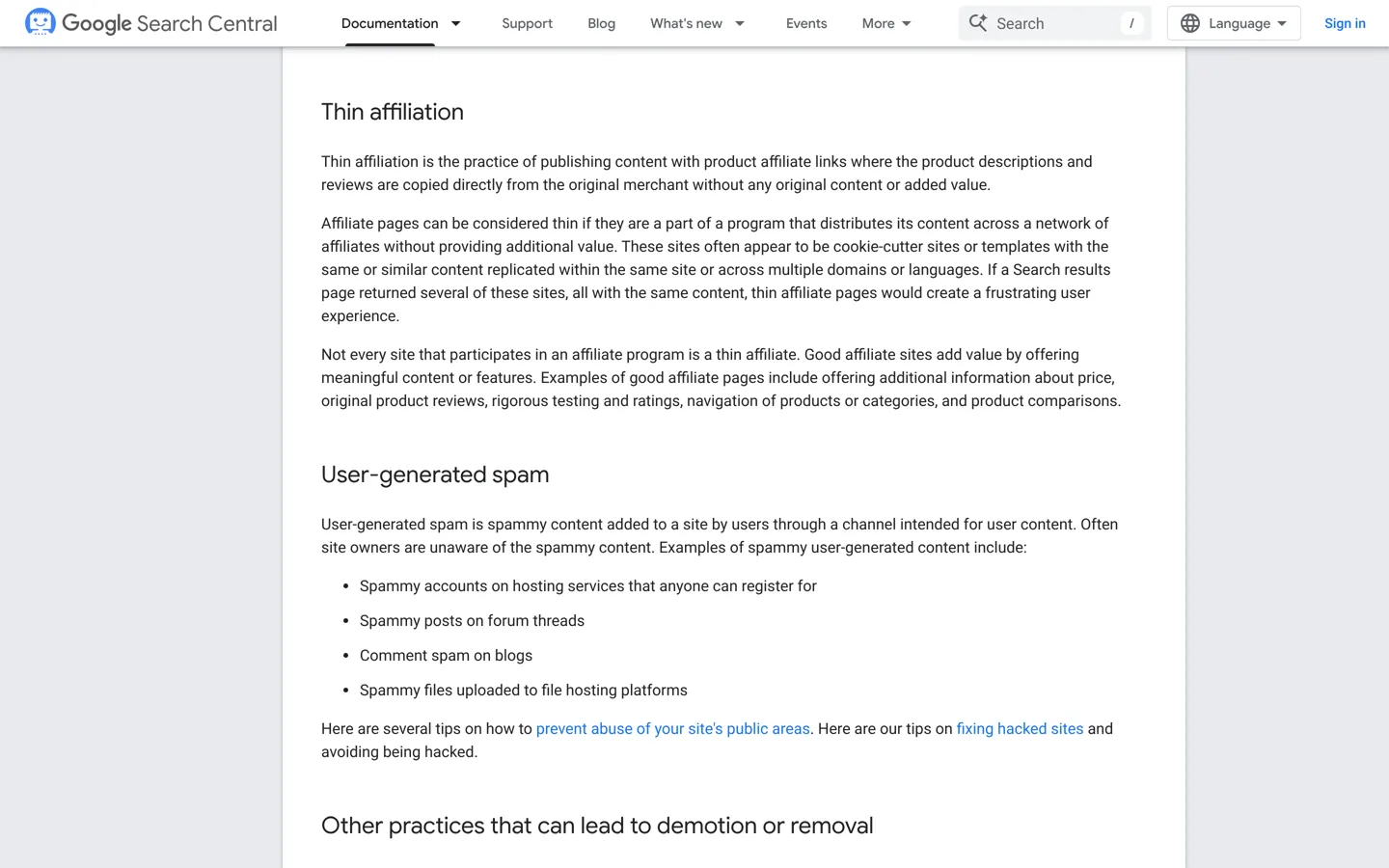
- Google calls copied merchant descriptions "thin affiliation"; add original value.
- Disclose near your links and use each programme's required wording.
- Expect months of building before income; no honest figure can promise more.
Here’s how to start affiliate marketing from zero: pick a topic you can genuinely help people with, build a place to publish (usually a blog), join programmes for products your readers already need, write helpful content that recommends them honestly, disclose your links, then track what earns and do more of it. This guide walks through each step for a complete beginner, with the rules that matter from Google’s own guidance and the programmes’ own terms, checked on 12 October 2026.
Want the bigger picture first? Our guide to earning money from a blog compares affiliate income with ads, products and services, and lists the main affiliate networks. This page is the step-by-step start.

How affiliate marketing works
A company (the merchant) gives you a link with your own tracking ID. When a reader clicks it and buys within a set time, the merchant pays you a commission. The reader pays the normal price. Four things decide what you earn:
- The commission: a percentage of the sale or a fixed amount per sale or sign-up.
- Whether it repeats: some software programmes pay every month a customer stays; most shops pay once.
- The cookie window: how long after the click a purchase still counts. It varies a lot. SE Ranking’s affiliate page states a 120-day cookie and Mangools’ a 30-day one, for example.
- The attribution rule: who gets paid when a reader clicked several affiliates’ links. SE Ranking says “first cookie, first claim”; many programmes credit the last click instead.
How to start affiliate marketing in 7 steps

Step 1: Choose a topic you can help with
Pick a subject where you know more than a beginner, or are willing to learn in public, and where people buy things to solve problems: software for a job, equipment for a hobby, services for a small business. Write down ten questions your future readers ask. If most of them lead to a product or tool, the topic can support affiliate income. If they don’t, you can still blog about it, but affiliate links will be a small part of your income.
Step 2: Build your own platform
A blog on your own domain is the most dependable base: search engines can send you visitors for years, and you control the page. Social accounts and videos work too, but each platform sets its own rules on links. Our guide on how to start a blog covers the setup. Start with a clear About page saying who you are and why readers should trust your advice.
Step 3: Find programmes for products your readers need
Start from the reader’s problem, not the commission. For each product you’d honestly recommend, search for its name plus “affiliate programme”, or look it up in a network. Many software and hosting companies run their own programmes; others join networks so you can apply to many brands from one account. Amazon Associates covers almost any physical product, at lower rates. Our list of recurring affiliate programmes shows programmes that pay monthly.
Step 4: Read the terms before you apply
Every programme has an agreement, and the details change what a link is worth. Check the commission, cookie window, payout threshold and payment method, and what you’re not allowed to do. Amazon’s programme policies, for example, say it won’t pay commission on purchases that come from ads bidding on keywords containing “amazon”, “kindle” or its other trademarks. Payment terms differ too: SE Ranking’s page states payouts twice a month by PayPal from $50. If a rule is unclear, ask the programme’s affiliate manager before you build content around it.
Step 5: Write content that helps someone decide
The pages that earn are the ones readers use to choose: honest reviews, “best for” lists, comparisons of two products and how-to guides that show a tool in use. Google’s spam policies call out “thin affiliation”: pages with affiliate links where product descriptions and reviews are copied from the merchant without original content or added value. Google adds that good affiliate pages offer extra information about price, original product reviews, rigorous testing and ratings, product comparisons and navigation of products or categories.
Google’s guidance on writing reviews asks for evidence of your own experience, such as visuals, audio or links, and suggests including links to multiple sellers so readers can choose where to buy. Use keyword research to find which questions people actually search for.
Step 6: Disclose and mark every affiliate link
- Tell readers, near the links. In the US, the FTC’s guidance for affiliate marketers says to disclose your relationship to the retailer clearly and conspicuously, and that “the closer the disclosure is to your recommendation, the better”. It also says a single disclosure on your home page isn’t enough, and that the words “affiliate link” on their own may not be understood. Its own example wording works: “I get commissions for purchases made through links in this post.”
- Use each programme’s required wording. Amazon’s operating agreement says you must clearly and prominently state “As an Amazon Associate I earn from qualifying purchases.”
- Mark the links for search engines. Google asks that links which are advertisements or paid placements carry
rel="sponsored"; affiliate links fall into that group.
Step 7: Track, then improve what works
Each programme’s dashboard shows clicks, sales and commissions. Compare them with your analytics: which posts send the most clicks, and which clicks turn into sales? A post with many clicks but no sales may be sending readers to the wrong product or page. A post that converts well but gets little traffic deserves better internal links and a fresh update. Review the numbers monthly, not daily.
Choosing your first programmes

When two products fit your readers equally well, these questions help you choose which to feature:
- Would you recommend it without the commission? If not, leave it out. Readers come back to sites whose advice works.
- Does it pay once or every month? A recurring software commission can be worth more over time than a higher one-time rate, if customers stay. ClickFunnels, for example, advertises 30% monthly recurring commission.
- How long is the cookie window? Products people research for weeks (hosting, software, courses) benefit from a longer window.
- Can you reach the payout? A high minimum payout can hold your first earnings for months.
- Is the company reliable? Look for clear terms, a reachable affiliate manager and a product that doesn’t change hands or close often.
What a first content plan looks like
For a new site, a simple mix works well. Write a few how-to guides that answer common questions in your topic and mention the tools you use. Add one honest review of a product you know well, with your own screenshots or photos. Then write one “best for” list that compares a handful of options for a single need, linking each to its review once you’ve written it. Link the guides to the review and the list, so readers who are ready to choose can find them. Our guide to WordPress themes for affiliate sites shows how to lay these pages out.
Where affiliate links work best on a page
Readers click links that appear at the moment they’re deciding. Put the first link where you name your recommendation, often in a short verdict near the top, and again beside each product in a comparison. Link the product’s name in the text rather than only adding buttons, because many readers skim and click names. Inside tutorials, link the tool at the step where readers need it. Don’t wrap every mention in a link: a few well-placed, clearly labelled links earn more trust, and more clicks, than a page full of them.
How long until you earn?
There’s no reliable figure, and anyone promising one is guessing. Earnings depend on traffic, and a new site usually needs months to build enough useful content and earn search visibility; Google’s SEO Starter Guide says some changes take a few hours to show and others several months. Treat the first months as building time: publish steadily, improve pages that start to rank, and expect income to start small.
Mistakes beginners make
- Promoting everything. A page that recommends ten products for one job helps nobody decide.
- Copying the merchant’s description. That’s exactly what Google describes as thin affiliation.
- Hiding the disclosure. Put it near the links, in plain words.
- Breaking programme rules, such as bidding on a brand’s name in search ads where its terms forbid it, which can cost you your commissions.
- Relying on one programme. Programmes change rates or close; spread income across several and keep your own audience, such as an email list.
- Chasing commission over fit. A product your readers don’t need won’t sell, however generous the rate.
Before your first affiliate post goes live
- Your site has an About page and an affiliate disclosure page.
- You’ve read each programme’s terms and noted the cookie window and payout.
- The post answers one reader question better than the pages already ranking.
- Your own evidence is there: screenshots, photos or test results.
- A clear disclosure sits near the first link, with any wording a programme requires.
- Every affiliate link carries
rel="sponsored". - Links point readers to the right page, and you’ve clicked each one to check it works.
Questions people ask
How do I start affiliate marketing with no money?
Joining programmes is free. You'll usually want a domain and hosting for a blog, but you can start publishing on a free platform and move later; the content and the reader's trust matter most.
How does affiliate marketing work?
A merchant gives you a tracked link. When a reader clicks it and buys within the programme's cookie window, the merchant pays you a commission; the reader pays the normal price.
Do I need a website for affiliate marketing?
Not strictly, but a blog on your own domain is the most dependable base: you control the page, and search engines can send visitors for years. Social platforms set their own link rules.
Do I have to disclose affiliate links?
Yes. Programmes such as Amazon Associates require a disclosure, and in the US the FTC expects a clear one near the recommendation. A plain sentence near the first link works.
Which affiliate programme should a beginner join?
One for a product you already use and would recommend anyway. Check its commission, cookie window, payout minimum and rules before you write about it.
How long does it take to earn from affiliate marketing?
There's no reliable figure. A new site usually needs months to build content and search visibility, so expect income to start small and grow with traffic.
Sources
- Spam policies for Google web search: thin affiliation developers.google.com · checked October 12, 2026
- Write high quality reviews (Google) developers.google.com · checked October 12, 2026
- Qualify your outbound links to Google developers.google.com · checked October 12, 2026
- Amazon Associates Program Operating Agreement affiliate-program.amazon.com · checked October 12, 2026
- Amazon Associates Program Policies affiliate-program.amazon.com · checked October 12, 2026
- SE Ranking affiliate program seranking.com · checked October 11, 2026
- ClickFunnels affiliate program www.clickfunnels.com · checked October 11, 2026
- FTC's Endorsement Guides: What People Are Asking www.ftc.gov · checked October 12, 2026

Building websites since 2006: 500+ web projects of every size and $300K+ in website deals sold or brokered. Founder of A Digital Motive and DigiFlippers. I share the whole process here, plainly.
Founder of A Digital Motive and DigiFlippers