
- Brands, networks, agencies and publishers all hire affiliate staff.
- Common roles: affiliate manager, partnerships manager, compliance.
- A small affiliate site of your own is the best proof.
- New York requires pay ranges in job listings (four+ employees).
- Real employers never ask you to pay to start.
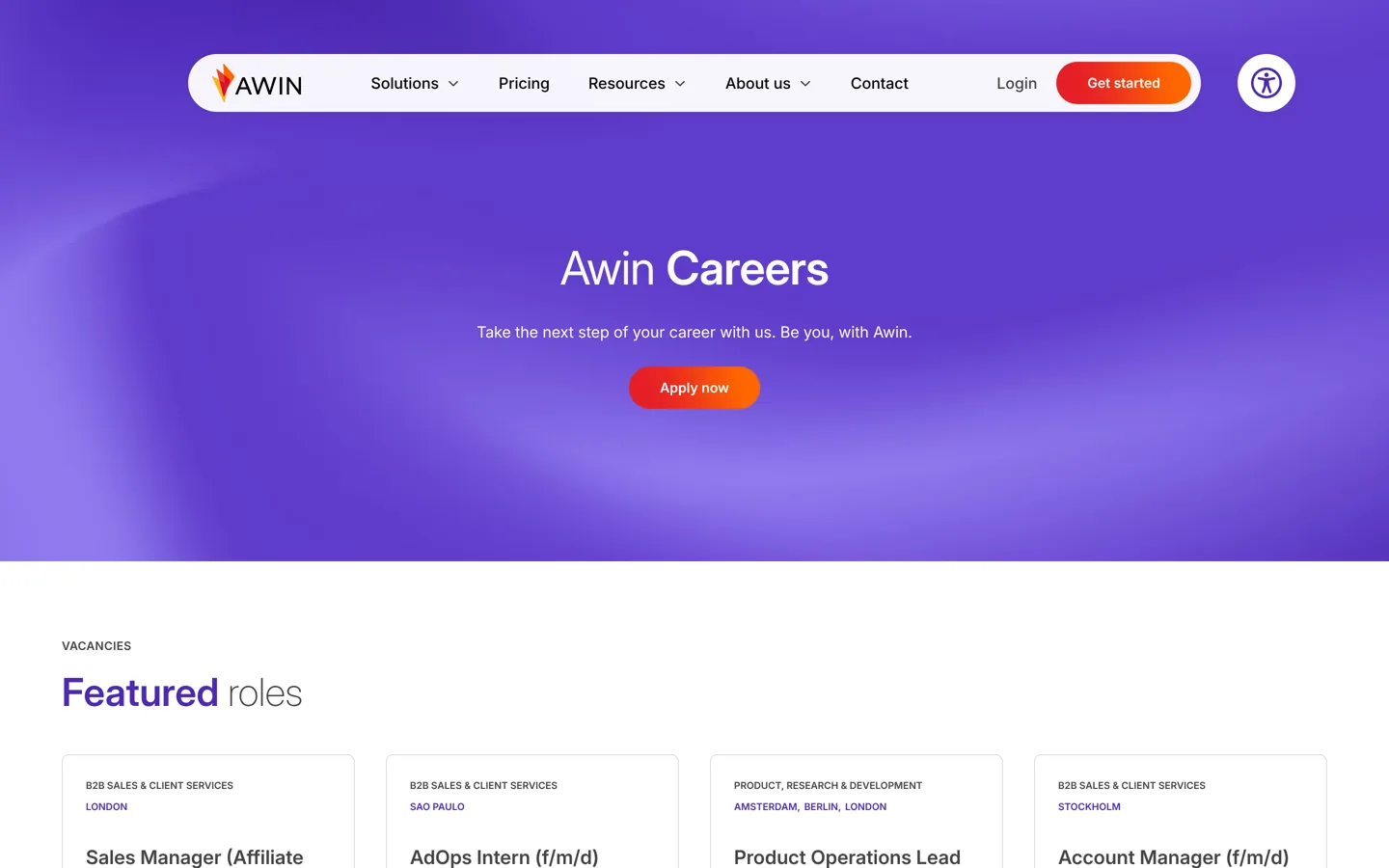
Affiliate marketing remote jobs are paid roles at the companies that run affiliate programs: brands, affiliate networks, agencies and large publishers. Common titles include affiliate manager, partnerships manager, affiliate marketing specialist, publisher recruiter and affiliate compliance analyst. Many are offered remote or hybrid; Awin, for example, says it offers “hybrid/remote work possibilities”. To get one, learn how affiliate programs work, build proof (ideally a small affiliate site of your own), and apply through network and brand careers pages. This guide covers the roles, skills and how to apply safely, checked on 12 October 2026.
Want to earn commissions from your own website instead of a salary? That’s a different path: see our guide on how to start affiliate marketing. This page is about jobs.

How the affiliate industry is organised
Four groups make affiliate marketing work, and each employs people:
- Advertisers (brands): companies that pay commission for sales or leads. They hire affiliate and partnerships managers to run their programs.
- Networks and platforms: companies such as Awin, Impact, CJ Affiliate and PartnerStack that track clicks and sales, pay commissions and connect brands with publishers. They hire account managers, publisher teams, compliance and support staff.
- Agencies: specialist agencies that run affiliate programs for several brands, with account management and recruitment roles.
- Publishers: websites, creators and apps that promote products. Larger ones hire writers, editors, SEO specialists and partnership leads.
Affiliate marketing remote jobs, by role
- Affiliate manager / affiliate program manager: runs a brand’s program day to day, recruits and supports publishers, sets commission offers and reports on results.
- Partnerships manager: a broader title covering affiliates, influencers, content partners and business-to-business referral partners.
- Publisher development or recruitment: finds and signs new publishers for a network or brand.
- Affiliate marketing specialist or coordinator: an entry or mid-level role handling links, creatives, payouts and reporting.
- Compliance analyst: checks that publishers follow program rules, such as disclosure and brand-bidding restrictions, and spots fraud.
- Content and SEO roles at publishers: writing reviews and comparisons, keyword research and on-page SEO for affiliate sites.
Job titles vary from company to company, so search for several of them, and read the description rather than the title. Entry-level roles such as coordinator or specialist are the usual way in; manager roles generally expect experience running a program or working closely with publishers. If you’re switching from another marketing job, email marketing, SEO, paid ads and account management all transfer well, so highlight them.
Why many of these jobs are remote
Affiliate work happens in dashboards, email and video calls: tracking platforms, reporting tools and partner conversations don’t need an office. Networks also serve brands and publishers across many countries. Awin’s careers page mentions “Flexi-Office and hybrid/remote work possibilities”, and impact.com describes teammates “spanning continents”. Remote doesn’t always mean “anywhere”: many remote roles still require you to live in a particular country or time zone for employment and tax reasons, so check each listing.
Skills employers look for

- How affiliate programs work: commission models, cookie or attribution windows, tracking, and the difference between a network and an in-house program.
- Relationship building: recruiting publishers and keeping them motivated is most of the job.
- Numbers: spreadsheets, conversion rates, average order value, return on spend and reading a dashboard without help.
- Rules and disclosure: knowing that affiliate links must be disclosed and how programs police brand-bidding and fake traffic.
- Writing: clear emails, newsletters to publishers and short reports for managers.
- Self-management: remote roles need people who plan their own day and communicate without being chased.
A day in a remote affiliate manager’s job
An illustration of a typical day, which varies by company. The morning starts with the dashboard: yesterday’s clicks, sales and any unusual spikes that might mean a tracking problem or fake traffic. Then come publisher emails: answering questions, approving new applications, and sending a top publisher next month’s promotion so they can plan content. Around midday there’s a video call with the brand’s marketing team about an upcoming sale, followed by an update to the commission offer for it. The afternoon goes on recruitment, researching sites that would suit the program and writing personal outreach, and on a short weekly report: what grew, what didn’t, and what you’ll try next.
The common thread is communication. Most of the job is helping other people succeed with your program, so patience, reliability and clear writing matter as much as being good with numbers.
Interview questions to prepare for
- How would you find and recruit the right publishers for our program?
- Which numbers would you watch weekly, and what would make you worried?
- How would you handle a publisher breaking the program’s rules?
- Tell us about a time you improved a result with a small change.
- How do you organise your week when working remotely?
Prepare one real example for each, ideally from your own site or a program you’ve joined. Specific numbers, even small ones, are far more convincing to a hiring manager than general claims.
Build proof before you apply
The strongest application shows you’ve done affiliate marketing, not just read about it. Three ways to build that proof:
- Run a small affiliate site in a niche you know. Even modest results show you understand programs, content and tracking from the publisher side; our guide on affiliate marketing with WordPress covers the setup.
- Join a few programs through networks, so you’ve used their dashboards, links and reports.
- Write about what you learn: a short case study of a page that earned (or didn’t, and why) is better than any certificate.
Our list of recurring affiliate programs is a good place to find programs to try.
Where to find these jobs
- Network and platform careers pages: Awin, Impact, CJ, PartnerStack and similar companies list roles directly.
- Brands you already know as an affiliate: companies with large programs often hire affiliate or partnership managers; check their careers pages.
- Professional networks and job boards: search for “affiliate manager”, “partnerships manager” and “affiliate marketing” with a remote filter.
- Industry communities and events: many roles are filled through people who already know your work.
Check the pay before you apply
Pay varies widely by role, company and country, so look at the range in each listing. Some places require one: New York State’s pay transparency law, for example, requires businesses with four or more employees to list compensation ranges for designated job opportunities, and employers must clearly state if a position is commission-based, according to the state’s Department of Labor. Be careful with commission-only “affiliate jobs”: they’re often not jobs at all, but an invitation to promote someone’s program for commission with no salary.
How to apply
- Tailor your CV to the role: programs you’ve run or joined, publishers you’ve worked with, results you can show.
- Link your proof: your site, a case study, or a short report on a program you’ve analysed.
- Show remote habits: mention tools you use, how you report progress and times you’ve worked across time zones.
- Prepare for a practical task: many teams ask candidates to audit a program or plan publisher recruitment.
- Ask good questions: what the program’s goals are, how success is measured, and how the team works remotely.
Avoid fake “affiliate jobs”
Scammers use the words “remote” and “affiliate” because they sound like easy money. The UK’s police fraud reporting service describes work-from-home scams that ask for an advance fee, don’t pay for work done, sell worthless products or require you to recruit others before you’re paid, and fake recruiters offering jobs that don’t exist. Real employers don’t charge you to apply, send you money to buy equipment, or ask you to move money for them.
- No real company behind the listing, or only a chat group.
- Pay for simple tasks that sounds too good, such as liking posts or clicking links.
- Requests to pay for training, a starter kit or a “deposit”.
- Pressure to decide fast or to move the conversation to a private messaging app.
Freelance and part-time routes
If a full-time role isn’t available, freelance work is a common way in. Brands and agencies hire freelancers to recruit publishers, audit programs or manage smaller programs a few hours a week, and publishers hire freelance writers for reviews and comparisons. Freelance work builds the same experience employers look for, and some freelance clients become employers. Our guide to keeping your first freelance clients explains how to turn one project into regular work.
A 90-day plan to your first role
- Days 1–30: join three affiliate programs, publish a few helpful pages on a small site, and learn each network’s dashboard.
- Days 31–60: write one case study, follow affiliate managers and network blogs, and connect with people in the industry.
- Days 61–90: apply for five well-matched roles a week, tailoring each application, and offer freelance help to one brand or agency.
Whether you end up employed or running your own sites, the skills are the same, and they compound. For a wider view of how bloggers earn, see our overview of ways to earn money from a blog.
Questions people ask
What jobs are there in affiliate marketing?
Affiliate and partnerships managers at brands, account managers, publisher recruiters and compliance analysts at networks, specialists at agencies, and writers and SEO roles at affiliate publishers.
Can affiliate marketing jobs be remote?
Often, yes. Networks work across countries, and Awin, for example, mentions hybrid and remote work possibilities. Many remote roles still require you to live in a particular country or time zone.
Do I need experience to get an affiliate manager job?
It helps a lot. Running a small affiliate site, joining a few programs and writing a short case study shows employers you understand the work.
Is a commission-only affiliate job a real job?
Usually not in the usual sense: it's an invitation to promote a program for commission, with no salary. In New York, employers must state clearly if a position is commission-based.
How do I spot a fake affiliate job?
Be wary of listings that ask you to pay for training or a kit, offer high pay for simple clicks, ask you to move money, or push you into private chat quickly.
What's the difference between an affiliate job and affiliate marketing?
An affiliate job is employment running or supporting programs for a company. Affiliate marketing on your own means earning commission from your own site or audience.
Sources
- Careers (Awin) www.awin.com · checked October 12, 2026
- Careers (impact.com) impact.com · checked October 12, 2026
- Careers (CJ) www.cj.com · checked October 12, 2026
- Pay Transparency (New York State Department of Labor) dol.ny.gov · checked October 12, 2026
- A-Z of fraud (Report Fraud, UK police) www.reportfraud.police.uk · checked October 12, 2026

Building websites since 2006: 500+ web projects of every size and $300K+ in website deals sold or brokered. Founder of A Digital Motive and DigiFlippers. I share the whole process here, plainly.
Founder of A Digital Motive and DigiFlippers